Project UpdatesResearch and Insights
Connecting households across Europe: The CARE community platform
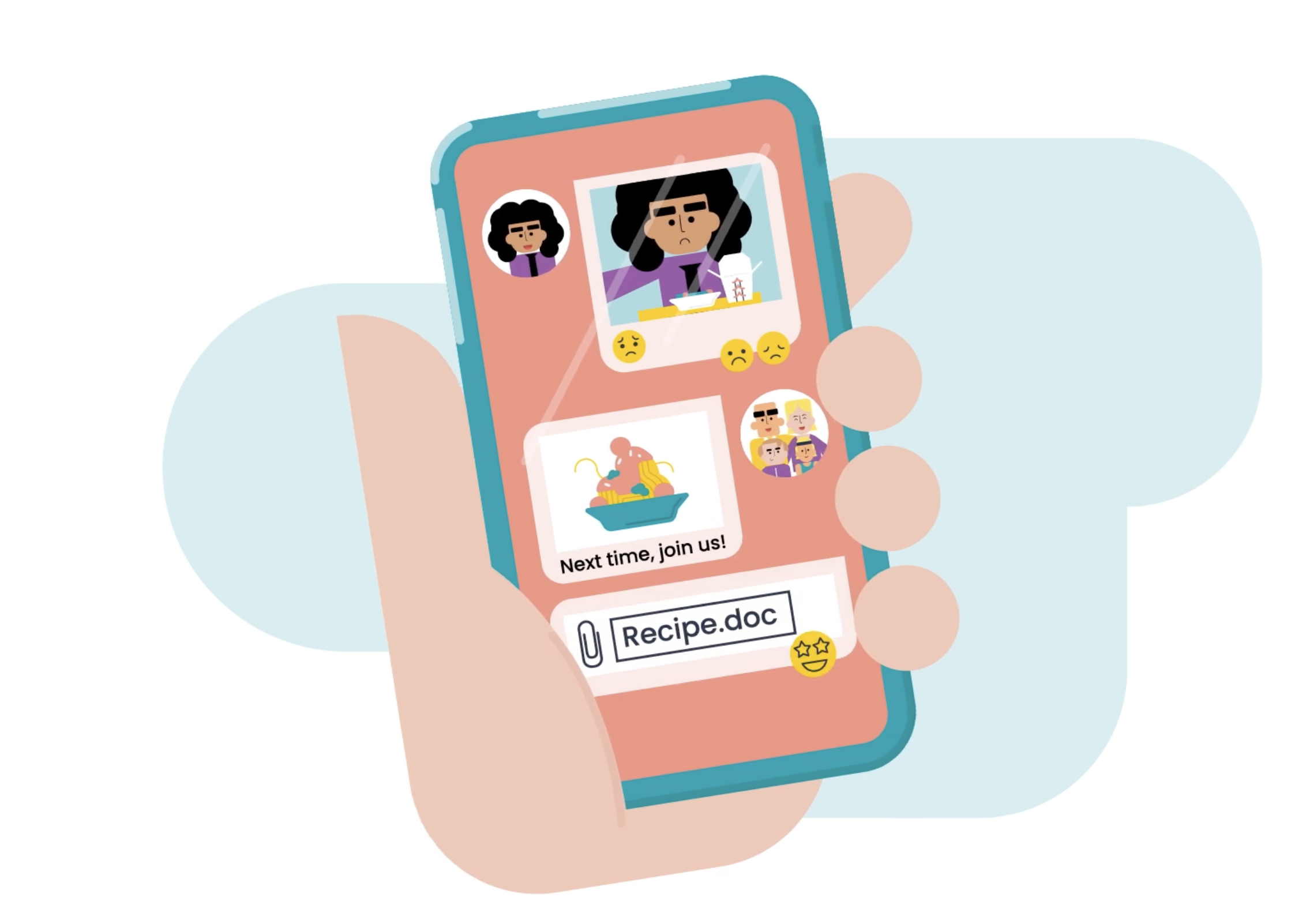
The CARE community platform connects households across Europe to share experiences, learn from one another and explore circular food and clothing practices together. By combining community learning, practical challenges and expert input, the platform supports behaviour change in everyday life while also generating valuable insights for research, policy and practice.
Why community learning matters for circular lifestyles
Changing everyday consumption habits can be challenging, especially when households feel they are doing so alone. The CARE project recognizes the important role that social learning and peer exchange play in encouraging long-lasting, sustainable behavior change. Research shows that social learning and collective action play a key role in sustainable behavior change (Luukkonen et al., 2024).
Within the CARE project, community learning therefore plays a central role in supporting households on their journey towards more circular lifestyles. By creating spaces for exchange, shared inspiration and peer support, CARE enables households across Europe to learn more from each other and reflect on their everyday practices.
As sustainability is a collective challenge, CARE offers families, couples and single households the opportunity to explore circular living together. Shared experiences can reduce the feeling of acting alone and help establish new social norms around food consumption and clothing use. In this way, previously held beliefs and routines can gradually evolve towards more sustainable practices.
To support this process, CARE has developed a dedicated community platform where participating households can exchange ideas, share experiences and learn together.
The CARE community platform
The CARE community platform is built around the principles of connection, learning, inspiration and co‑creation. It provides a digital space where households participating in the circular pilots can connect with one another, explore circular practices and reflect on their everyday consumption habits.
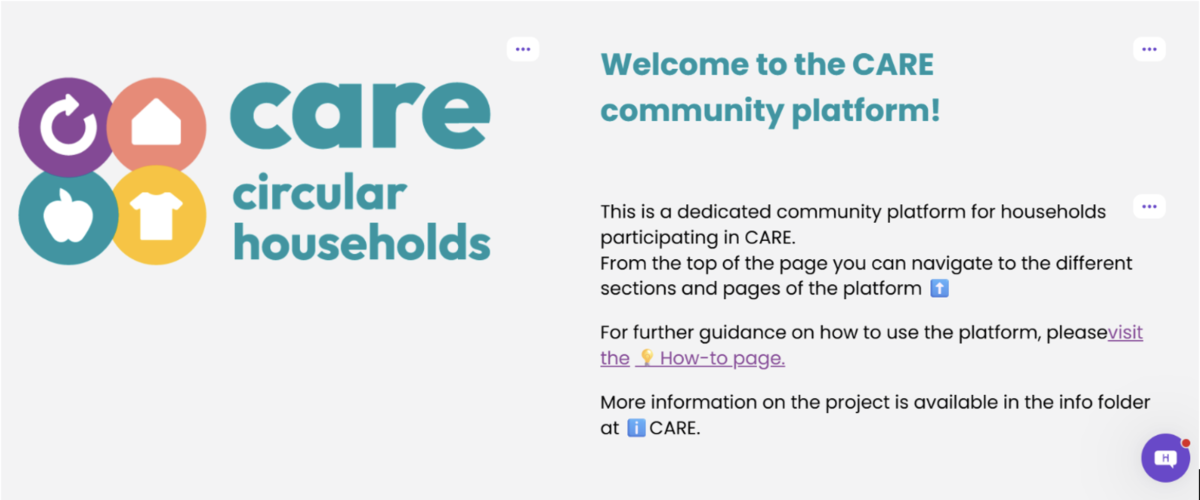
The CARE community platform provides a shared digital space where households can access information, navigate between sections and engage with circular living activities.
The platform also reflects the CARE project’s visual identity, including its colors, typography and visual elements. This helps create a familiar environment for participants and strengthens the connection between the digital platform and the wider CARE project experience.
Through personal challenges, discussions and shared activities, participants exchange practical tips and experiences related to food and clothing consumption. They can also interact with local sustainability experts involved in the project, set personal sustainability goals and track their progress towards more circular practices.
Compared to a typical online forum, the CARE community platform is designed as an interactive learning environment developed by leading academics and sustainability practitioners. It complements the personal advisory services and the co-learning activities that households experience during the CARE interventions.
In this way, the platform helps households further develop circular practices as part of their everyday routines.
How the platform has been used so far
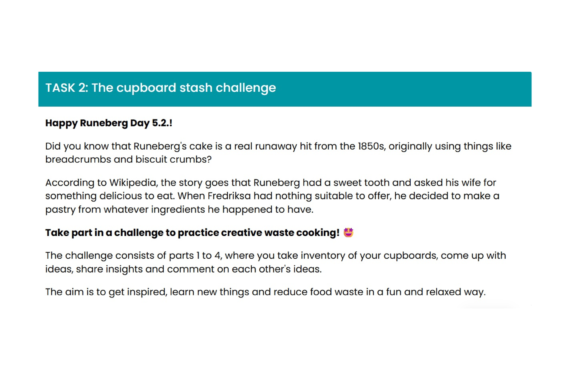
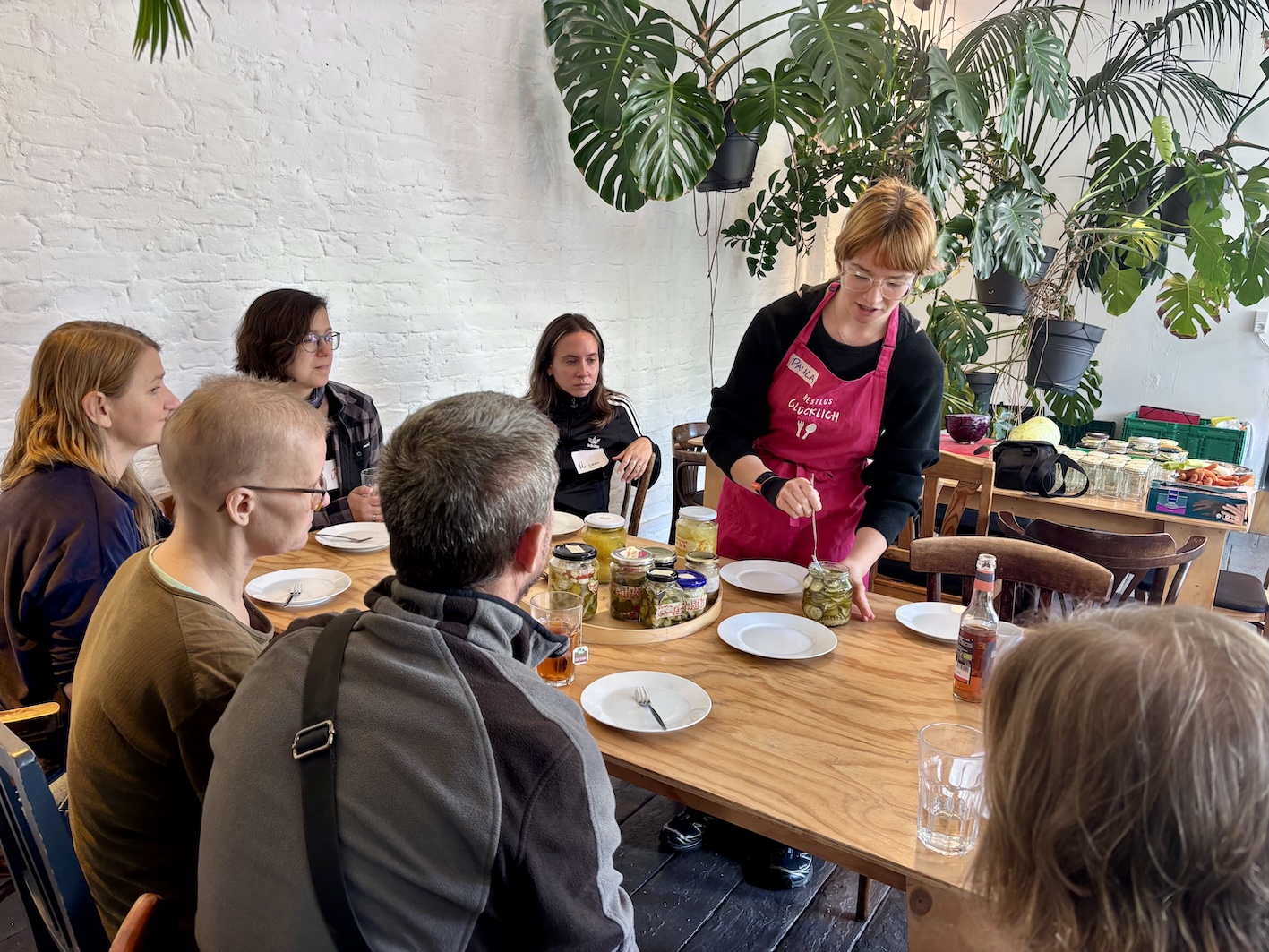
Participants engage in practical challenges, such as using ingredients at home creatively to reduce food waste.
Introduced in 2025, the community platform provides a range of tools that support interaction and engagement among participating households. These include discussion spaces, surveys, quizzes, polls, and collaborative idea-sharing formats.
All pilot countries (Finland, Sweden, Norway, Germany and Estonia) use the same platform structure and software, allowing the CARE team to create a consistent and user-friendly experience. To ensure accessibility and encourage participation, each country manages its platform in the local language.
So far, the platform has proven to be a valuable tool for engaging participants during the CARE interventions. It supports the development of a sense of community among households while also providing a space to collect feedback, experiences and insights from participants.
Examples from the CARE pilots: How households use the platform in practice
Within the food waste pilot, participants have used the platform to exchange practical ideas and reflect on their everyday experiences. For example, households have:
- shared meal ideas using ingredients approaching their best‑before date,
- developed and shared their own leftover recipes, and
- reflected on their experiences with reducing food waste during festive seasons.
Similarly, participants in the clothing consumption pilot have used the platform to discuss everyday clothing practices. Activities have included:
- setting personal goals to improve the sustainability of clothing consumption,
- sharing their preferred ways of washing and caring for clothing, and
- reflecting on their experiences and practices with washing care labels and clothing maintenance.
These exchanges not only support learning between participants but also provide valuable insights for the CARE research team into how households approach circular practices in their daily lives.
The CARE community platform connects households across Europe, enabling them to exchange ideas, share experiences and explore circular food and clothing practices together. | © Lichtspieler
Early insights from CARE’s circular pilots: What we are learning so far
Initial experiences suggest that the platform can be particularly effective when discussions build on participants’ personal experiences. Encouraging households to share their own tips, practices and reflections help stimulate interaction and peer learning.
A participant survey conducted in Germany also indicated that households particularly appreciated informative posts related to sustainable clothing and food consumption. Practical information combined with opportunities for exchange appears to support engagement and continued participation.
What comes next for the community platform?
Looking ahead, the CARE team aims to further strengthen the community-based learning approach across the pilot countries. One next step will be to share successful engagement formats between countries. For example, the positive response to informational posts observed in Germany could be replicated in other pilot regions.
In addition, many CARE participants have expressed interest in learning from households in other countries. To support this exchange, the project plans to introduce a shared set of questions across all five pilot regions. The collected responses will then be compiled and shared with participants in each country.
This approach will allow households to learn from experiences across different cultural contexts and further strengthen the European community aspect of the CARE project.
Join CARE’s journey towards circular lifestyles
The CARE project explores how households across Europe can reduce food waste and extend the lifetime of clothing through everyday practices, peer learning and community engagement. Insights from the CARE pilots help researchers, municipalities and civil society organizations better understand how circular living can be supported in practice.
You might also be interested to follow CARE on LinkedIn and Bluesky or subscribe to our newsletter to stay informed about new findings, tools and stories from the CARE pilot regions.
Together with CARE, we transform our homes for the better.
Header image: © Lichtspieler