Project Updates
Reflecting, learning and moving forward: CARE partners meet in Helsingborg
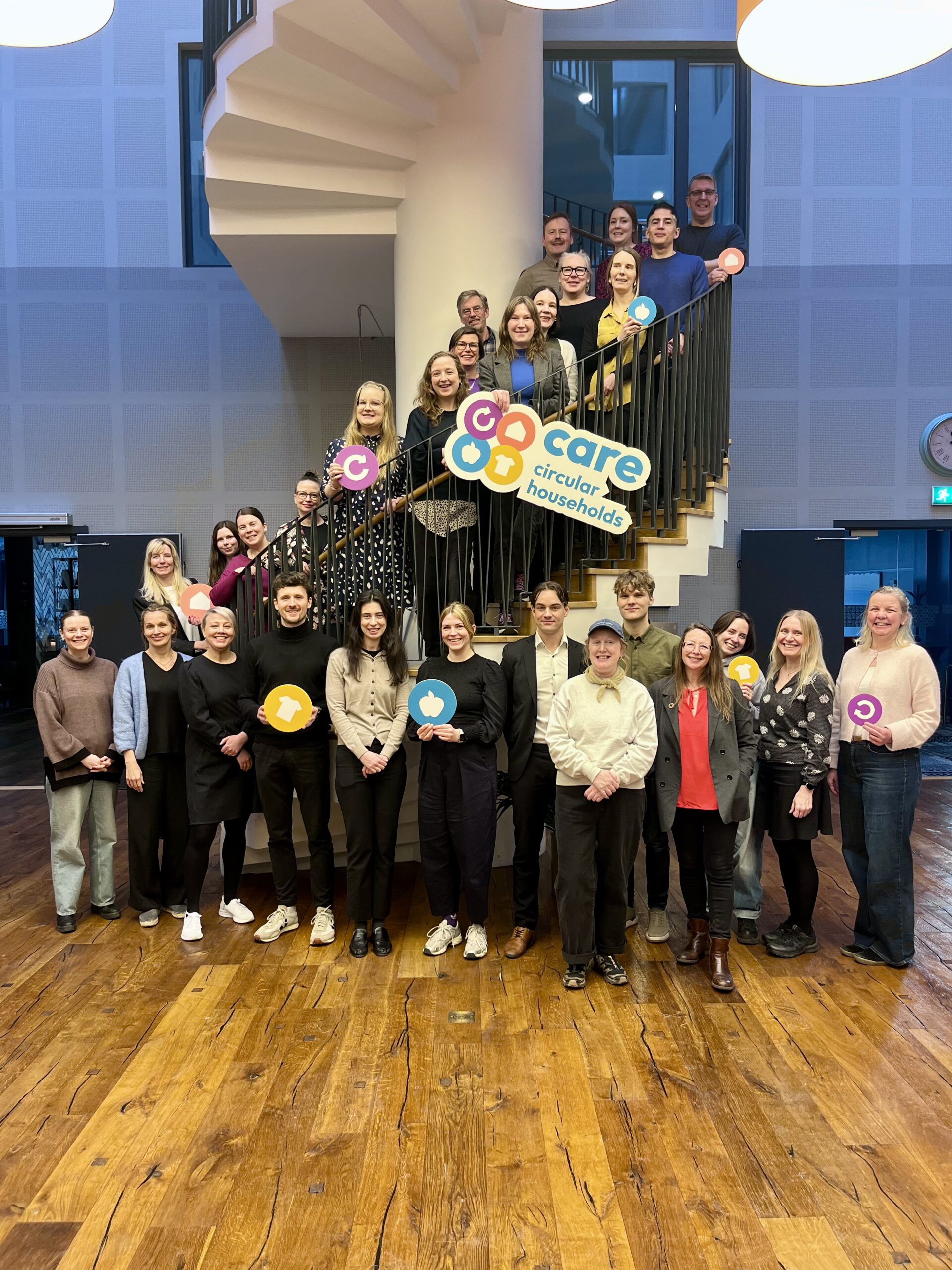
On 5–6 March 2026, the CARE consortium gathered in Helsingborg, Sweden, for its General Project Meeting. Bringing together partners from across Europe, the meeting marked an important mid-term milestone – a moment to reflect on progress, exchange experiences and shape the next phase of implementation. Hosted and organised by Lund University, the two-day meeting combined interactive workshops, strategic discussions and forward-looking planning.
Day 1: Reflecting on interventions and shared learning
The first afternoon focused on the project’s ongoing interventions in the area of cooking and washing. Partners shared experiences from implementing the interventions in their local contexts, openly discussing successes, challenges and unexpected insights from working with households. Through group discussions, participants explored how different cultural and social contexts influence everyday practices such as food management or clothing care, and how these learnings can inform the remaining project activities.
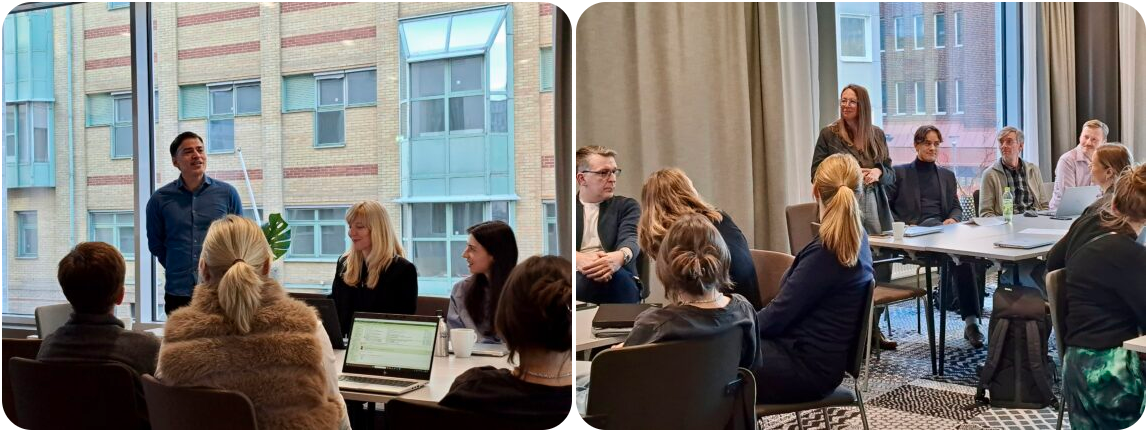
CARE partners exchanging experiences from implementing project interventions during workshop sessions at the General Project Meeting in Helsingborg, Sweden.
The day concluded with a working dinner in Helsingborg’s city centre, offering further opportunities for informal exchange and strengthening collaboration across the consortium. As Elina Närvänen from Tampere University reflected, “We have already got to know each other quite well remotely and in previous project meetings. It is, however, always more pleasant to engage with each other face-to-face.” Harald Throne-Holst from OsloMet highlighted the importance of trust within the consortium: “As the partners now know each other quite well, this has created a relationship marked by high trust. This creates a good environment for open and creative exchanges between CARE project partners.”
Day 2: Advisory services, research collaboration and communication
The second day expanded the focus to advisory services, research collaboration and communication activities.
In a dedicated workshop, local partners exchanged experiences from their advisory services to households. Using a “campfire discussion” format, each partner presented a typical advisory meeting and shared insights from their local pilot activities. Discussions highlighted that advisory services often function less as expert instruction and more as a dialogue that helps households reflect on their everyday routines. As one partner noted during the session, “In many cases, our role was not to tell households what to do, but to create a space where they could reflect on their own habits and discover opportunities for change.”
Partners also noted that personal engagement, whether through home visits or individual consultations, can strengthen motivation and deepen understanding of household practices. The session, facilitated by EcoFellows, underlined the importance of tailoring advice to household realities while maintaining a consistent project framework.
By gathering insights from different countries and learning from each other, we gain a better understanding of the needs and challenges for the next rounds of advisory services and interventions. – Annelise de Jong, IVL Swedish Environmental Research Institute
In parallel, academic partners met to discuss data collection, emerging research ideas and planned publications. The discussion focused on how insights from the pilot activities can inform upcoming scientific outputs and how research findings can, in turn, strengthen the project’s advisory work and future formats. This exchange highlighted the importance of linking practical experiences from the pilots with rigorous scientific analysis. The discussions highlighted how closely the practical and research dimensions of CARE are connected.
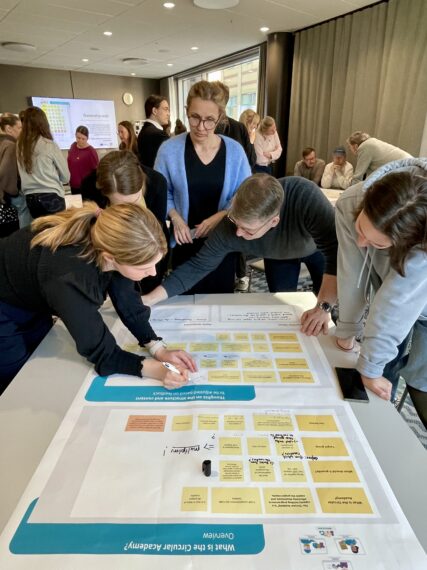
CARE partners discussing project outputs during the ownership walk session. | Photo by Katrin Hüttepohl, CSCP
Later in the day, the consortium reviewed CARE’s communication and dissemination activities and explored upcoming outputs designed to ensure that project results remain usable beyond the project lifetime. “Our goal is not only to communicate results, but to translate them into formats that organisations can actually use in their work with households.” Said Katrin Hüttepohl from CSCP. Partners discussed the structure and purpose of key formats including the Circular Academy, the CARE Toolbox, as well as the planned Fashion Magazine and Cookbook.
Looking ahead to the project’s outputs, Elina Närvänen from Tampere University highlighted the importance of ensuring long-term impact: “Now that we are gradually starting to give more thought to replicability and exploitation of CARE results beyond the project, it was exciting to discuss how these formats can support stakeholders interested in changing households’ practices toward circularity.”
During an interactive “ownership walk”, partners explored these formats in more detail, discussed potential contributions from their organisations and shared ideas on how the formats could support organisations and households across Europe.
The meeting also included status updates on the overall progress of the project and outlined key tasks for the next phase.
Moving Forward Together
The Helsingborg meeting reaffirmed the strength of the CARE consortium, showcasing its diverse expertise, shared commitment, and willingness to learn from one another. As the project moves into its next phase, the insights gained during the meeting will help refine the ongoing pilot activities, strengthen advisory approaches, and shape the formats through which CARE’s results will be shared with organisations and households across Europe.
As Emma Samsioe from Lund University noted, “One of the key takeaways from the meeting was how valuable it is to work directly with households over a long period of time. This approach gives us a much deeper understanding of people’s daily lives and helps us see what it actually takes to change everyday practices.”
The consortium is now continuing its work with renewed clarity and momentum, striving to enable practical, climate-conscious choices in everyday life.
Be part of CARE’s journey
CARE brings together researchers, municipalities, civil society organisations and practitioners across Europe to explore how circular living can become part of everyday life. If you are working on circular lifestyles, behaviour change or community engagement, we would be happy to stay connected and exchange ideas.
Follow CARE on LinkedIn, Bluesky or Instagram and subscribe to our newsletter to stay informed about upcoming insights, tools and project developments.
Together with CARE, we transform our world for the better.
Header image: Photo by Emma Samsioe, Lund University