Circular Clothing PilotProject Updates
Recycling starts long before the bin: What circular clothing practices can teach us
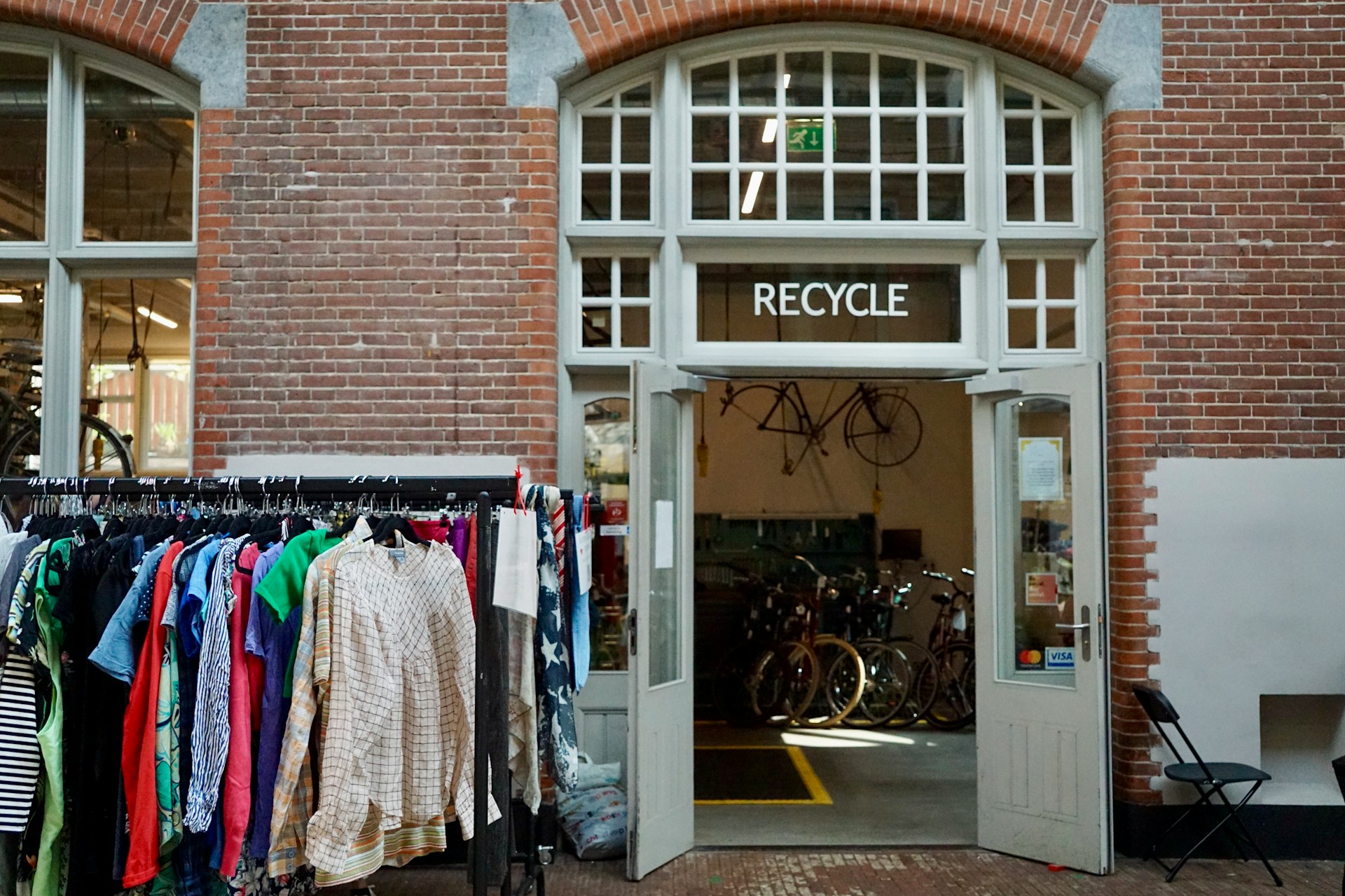
Every year on 18 March, Global Recycling Day raises awareness of the importance of recycling materials such as metals, plastics, glass, paper and electronics, in order to protect natural resources and reduce environmental pressures. Recycling is a vital part of the circular economy.
Textiles are becoming an increasingly important part of this conversation. The production and consumption of clothing has grown significantly over the past few decades, as has textile waste. However, garments present a unique challenge: although they are technically recyclable, they are often difficult to process due to fibre blends, quality degradation, and the limited availability of collection and sorting infrastructures. Globally, less than 1% of used clothes are recycled into new clothes, according to the European Parliament (2025).
In the CARE project, our focus is specifically on clothing because garments have a substantial environmental impact long before they ever reach a recycling facility. On this Global Recycling Day, we are therefore taking a closer look at what happens before recycling becomes necessary, and at how local pilot interventions across Europe are contributing practical insights to circular textile strategies.
Why recycling matters
Recycling plays a vital role in conserving energy, reducing pollution, and keeping finite resources in circulation, which is precisely what Global Recycling Day seeks to highlight each year. By recognising recyclable materials as the ‘seventh resource’, alongside water, air, oil, natural gas, coal and minerals, the day highlights that these materials are as valuable as primary resources.
However, recycling alone cannot address the environmental implications of clothing production and consumption. Every garment — regardless of brand, price or production speed — requires resources, energy and water. High-volume and fast production models intensify these pressures, but environmental impacts are embedded in all material processing.
For textiles, a large proportion of the environmental impact occurs during fibre production, manufacturing, transport and use. This is why circular strategies must combine effective recycling systems with approaches that extend product lifetimes and reduce material demand.
Circular clothing practices before recycling

Everyday laundry practices influence how long garments remain in use and how often they need to be replaced. | Photo by Thomas Dumort | Unsplash
Circularity is not only about technical waste systems; it is also about how garments are designed (including material choices), valued, maintained and used. At the systemic level, this includes: policy frameworks that incentivise durability and repair, extended producer responsibility schemes, municipal repair and reuse infrastructures, industry innovation in material design. At the same time, everyday practices shape how long garments remain in use.
In the CARE circular clothing pilot, structured interventions explore three practical ways to extend the lifetime of clothing:
- Washing and care practices – encouraging less frequent washing, lower temperatures and alternative cleaning methods instead of full wash cycles,
- repair and redesign – supporting households in mending and adapting existing garments,
- reuse and reduced acquisition – promoting swapping, second-hand use and more conscious purchasing decisions.
These interventions are implemented through workshops and community exchange formats and are supported by local advisory services. Rather than being isolated behavioural measures, they are designed as practice-based contributions to broader circular economy strategies.
By reducing resource use and extending garment lifespans, such practices complement recycling systems that operate later in the product life cycle.
Spotlight: Circular clothing interventions across CARE regions
The CARE clothing pilot is currently being implemented in Germany, Finland, Sweden, Norway and Estonia. Although it is based on a shared methodological framework, each region adapts the interventions to suit its local context.
The first two clothing intervention phases, currently being implemented and prepared across the pilot regions, focus on practices that help extend the lifetime of garments before recycling becomes necessary. Initial activities address washing and care practices, encouraging households to maintain clothing in ways that reduce wear and prolong use. Building on this, the second phase focuses on repair and redesign practices. Through workshops and other interactive sessions, participants develop practical mending skills and reflect on how maintenance and repair can influence perceptions of value and the longevity of garments.
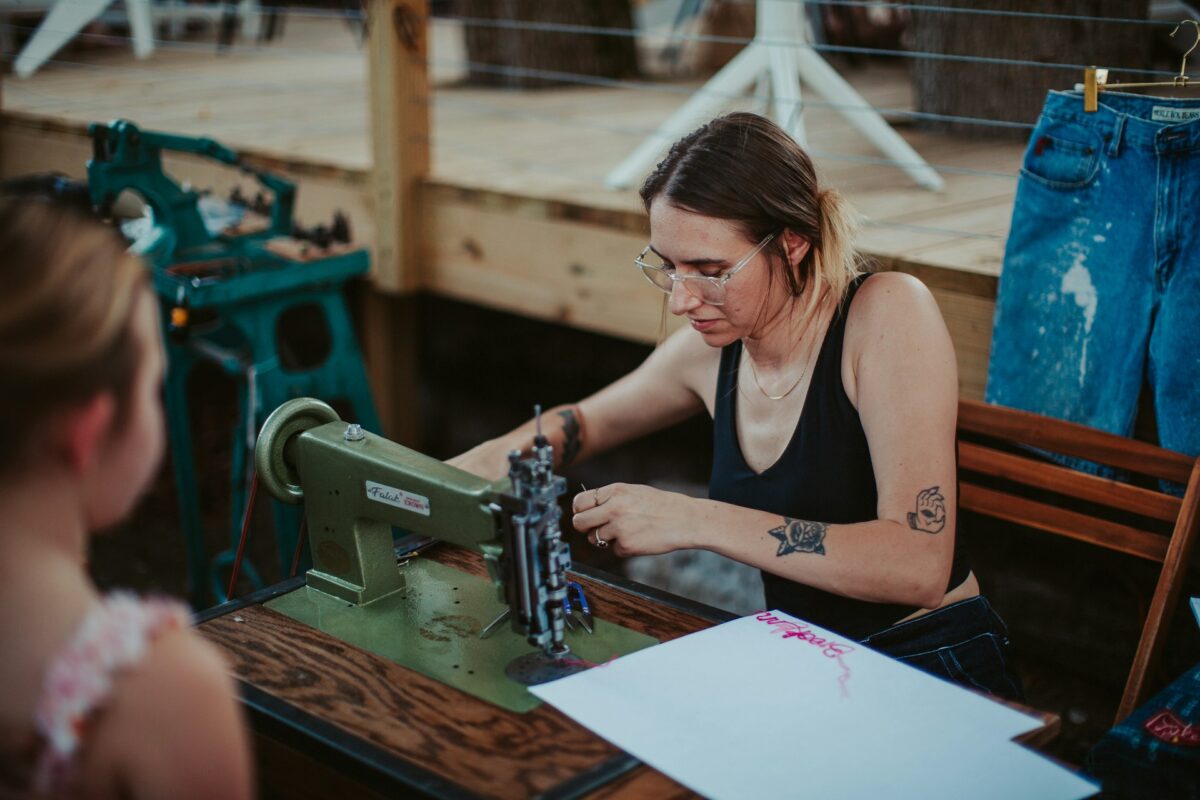
Repair workshops help households develop practical skills to maintain and extend the life of their garments. | Photo by Samuel Yongbo Kwon | Unsplash
Berlin (Germany):
The Berlin households will meet again at the end of March for their next live workshop. During a four-hour session, participants will first learn simple hand techniques such as darning holes and visible mending. They will also have the opportunity to bring garments that need repair and receive individual advice. A fun quiz at the beginning will introduce the topic of repairing in a playful way.
“Many of our households have damaged garments at home that they no longer enjoy wearing”, says project manager Miriam Bätzing. “For some, the workshop is their first encounter with repair. More experienced participants can also try more advanced techniques on site.”
Tampere (Finland):
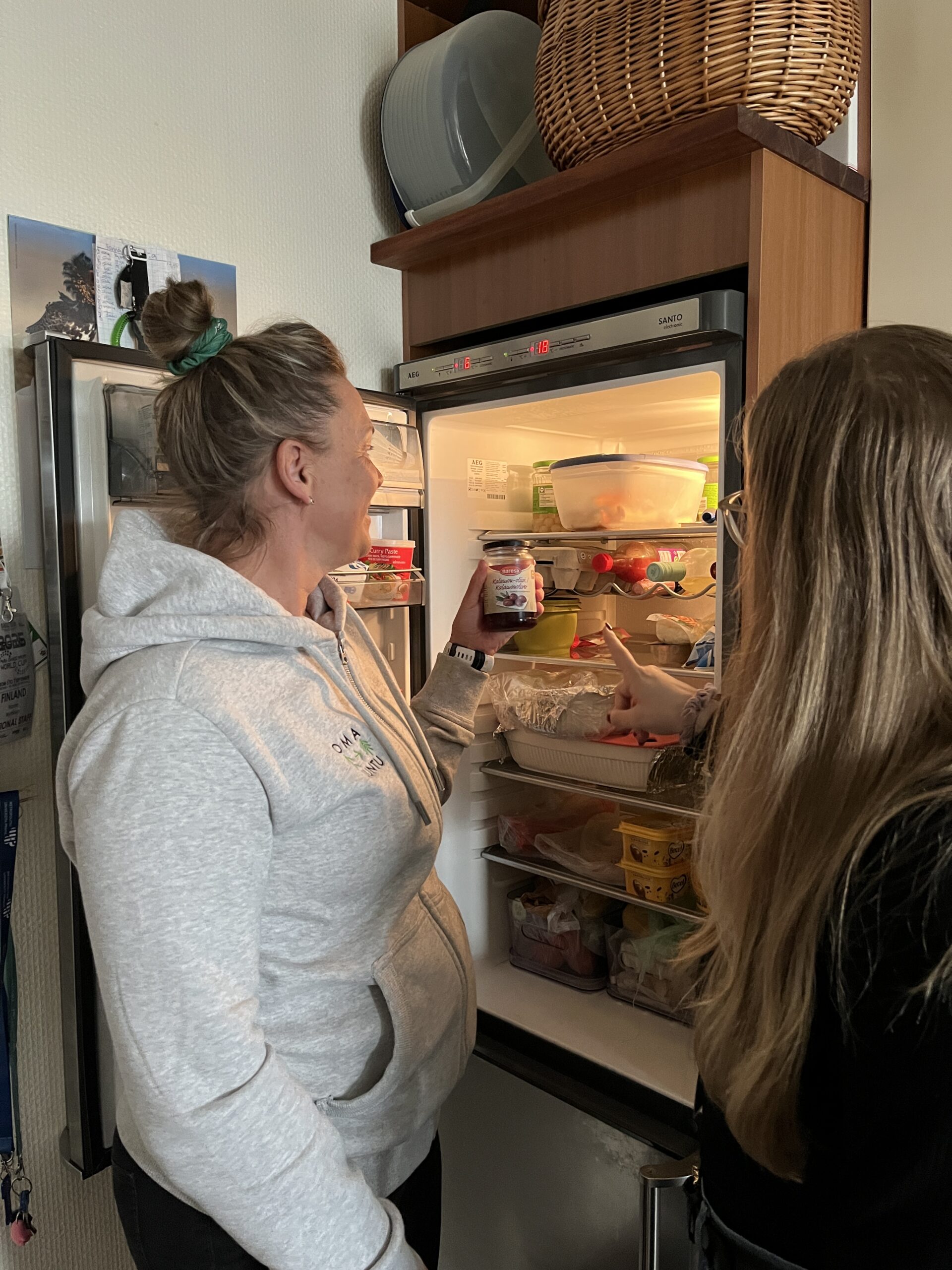
At the beginning of the year, workshops were held as part of the Finnish CARE pilot to help households extend the interval between laundry washes. During the sessions, participants experimented with different stain-removal techniques. One surprising trick for many was using hairspray to remove pen stains.
The majority of a garment’s emissions are generated before it even reaches use. That is why it is essential to take good care of clothes so they can be worn as many times as possible. For the spring, we are planning clothing repair workshops where households in the Tampere region will have the opportunity to practise repairing their own garments.
Gothenburg (Sweden):
In January, Swedish households participated in a workshop on washing and caring for clothes. Participants were challenged to remove different types of stains and experimented with various techniques. Valuable knowledge was shared among the households.
Following the workshop, participants continued experimenting at home – for example by airing clothes instead of washing them or trying different stain-removal methods. One household even tried stretching a wool sweater that had shrunk in the wash. Taking care of clothing is an important part of circularity: when garments are maintained well, they last longer and the need to buy new clothes decreases. Even small care practices can make a significant difference.
Asker kommune (Norway):
In Asker municipality, our NGO partner Fremtiden i Våre Hender recently hosted a workshop on how to preserve clothing. Much of the discussion focused on how to wash clothes properly, and it was encouraging to see how engaged the households were. Several participants said they wanted to better understand different fabrics and how to care for them. There was also strong interest in learning how to choose more durable garments rather than synthetic blends.
Lääne-Harju (Estonia):
In Lääne-Harju, the CARE pilot is also exploring ways to strengthen circular clothing practices among participating households. The upcoming intervention phase will focus on repair and garment care as part of the shared CARE methodology.

Air-drying clothes instead of using a dryer is one of many everyday practices that can help extend the lifetime of garments and reduce environmental impacts. | Photo by Annie Spratt | Unsplash
From local pilots to European circular economy strategies
Beyond local implementation, the CARE regional partners are part of the Circular Cities and Regions Initiative (CCRI). This alignment creates opportunities for knowledge exchange and ensures that insights from the pilot regions can be shared within regional circular economy discussions over time.
The aim is to test local solutions and generate transferable service concepts and policy-relevant insights that support implementation beyond the project context.
By linking structured local interventions with municipal infrastructures and regional circular strategies, CARE is making a direct contribution to the advancement of SDG 12 (Responsible Consumption and Production) and SDG 11 (Sustainable Cities and Communities). Practical steps towards operationalising these goals include extending garment lifetimes, strengthening repair ecosystems and embedding circular advisory services at a regional level.
Join the conversation on circular clothing practices
Extending the lifetime of garments is a key step towards a more circular textile system. Through its regional pilots, CARE explores how everyday clothing practices can contribute to reducing environmental impacts and informing circular economy strategies.
Follow CARE on LinkedIn and Bluesky to stay informed about insights from our pilot regions and updates on how practice-based interventions can inform circular textile policy, research and municipal action across Europe. And if you would like to find out more about our project partners, take a look at our project’s partner page.
Header image: Photo by Luba Glazunova | Unsplash