Local EngagementPartner Spotlight
Less waste, more systems: How municipalities can empower households for circular living
On a weekday afternoon in Asker kommune, Norway, residents drop off items at Omigjen, a circular reuse center that started as a municipal initiative and is now privately operated. Second-hand shops operate alongside repair services and community initiatives. The aim is not simply to manage waste, but to keep products in use for as long as possible.
This example illustrates what a zero-waste approach at a municipal level can look like: not only separate collection systems, but also infrastructures and partnerships that enable households to prevent waste in everyday life. On International Zero Waste Day, we therefore ask: How can cities empower households to reduce food and textile waste?
The municipal role in enabling circular practices
Zero Waste at a municipal level involves more than just waste management. It means creating the conditions that make circular behaviour possible. As the governance level closest to citizens, municipalities translate national and European circular economy ambitions into concrete local infrastructures, services and partnerships. Municipalities influence:
- local waste prevention strategies,
- advisory services for citizens,
- repair and reuse infrastructures,
- collaboration with NGOs and businesses,
- and also integrating circular economy principles into regional strategies.
Within the CARE project, five pilot regions — Tampere, Asker, Gothenburg, Berlin and Lääne-Harju — are testing circular advisory services and structured interventions related to food and clothing. Asker and Lääne-Harju are particularly relevant examples. Both are municipal partners in CARE and active within the Circular Cities and Regions Initiative (CCRI). Their experiences offer insights into how governance, infrastructure and community engagement can work together to support Zero Waste strategies.
Municipal perspectives from CCRI regions: The case of Asker
We asked Ask Liliequist Stølan from Asker kommune not only about their current actions, but about the broader lessons and challenges of implementing Zero Waste locally.
What does ‘zero waste’ mean in your municipality?
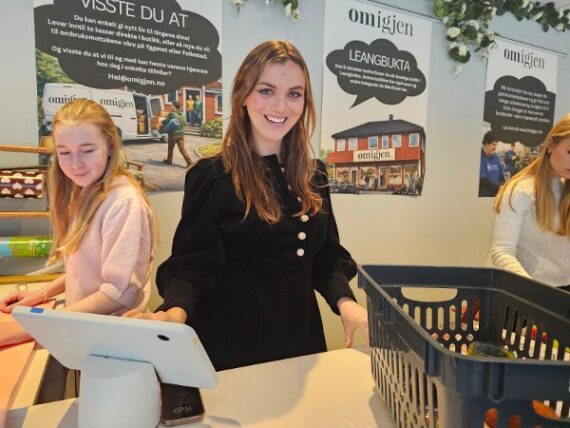
Staff and visitors interact at Omigjen, where reuse becomes part of everyday routines through accessible and user-friendly services. | © Omigjen
Zero waste in Asker is understood as a guiding principle rather than a fixed goal. It means engaging all sectors of the municipality in circularity and waste prevention. This approach is reflected in our Climate Action Plan towards 2033, where sustainable consumption and circular solutions are integrated into municipal priorities. We continuously seek to identify reuse opportunities for materials and assets — from items collected at recycling stations to building materials from demolition projects, furniture, and any other assets owned or acquired by the municipality.
At the same time, we focus on making reuse visible and accessible for residents. The reuse shop Omigjen is one example, showing how reuse can become a natural part of everyday life rather than a one-off initiative. In addition, we offer a free advisory service on sustainable and circular home renovation, supporting residents in making environmentally responsible and reuse-oriented choices.
How do you empower households to reduce waste in everyday life?
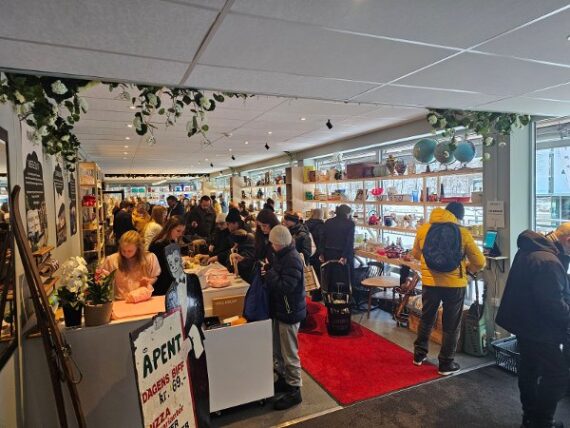
Visitors at Omigjen explore reuse options in a circular reuse centre in Asker, where items are collected, repaired and redistributed locally. | © Omigjen
For us, empowerment starts with infrastructure. It must be easy for residents to make circular choices. This is why we invest in solutions that make reuse and repair visible and accessible. Omigjen has been an important step in this direction.
Through our involvement in the CARE project, we are also exploring a more personalised approach, particularly in relation to food and textile consumption. Our ambition is to meet residents in their everyday lives, not only through campaigns, but through practical support.
Infrastructure such as Yggeset and Follestad recycling centers further strengthens this ecosystem. They are not only typical waste facilities, but also places where items can be handed in for reuse, picked up by others, and redistributed to local second-hand initiatives.
Which elements of your approach could other municipalities adopt or adapt?
What impressed me when I started working for Asker municipality last fall, was how strongly circular economy is anchored at both the political level and leadership level. It is not treated as a side project, but as a shared priority across the entire municipal organisation. When department heads share the same ambitions, it becomes possible to integrate circular practices across all sectors.
Equally important is maintaining strong bottom‑up channels, enabling staff working directly with circular economy projects to report barriers and opportunities to senior management. In our experience, this combination of clear top‑down direction and active bottom‑up feedback is a key success factor – and one that can be adapted by other municipalities.
What regional conditions shape your zero waste strategy?
Asker’s regional context strongly shapes our zero waste strategy. Our proximity to Oslo provides access to regional networks, specialised expertise and collaboration opportunities that strengthen circular initiatives. Being part of an urban region also creates unique possibilities, such as receiving high‑quality donated furniture and equipment for furnishing refugee and social housing.

Hands-on learning in a garden setting helps children understand where food comes from and how to value it. | Photo by Allan Mas | Pexels
At the same time, Asker’s mix of urban centers and rural communities requires flexible, place‑adapted solutions that support circular initiatives across long distances. Our rural character and natural areas have enabled major investments in school gardens and hands‑on food education, helping children understand food systems and reduce food waste.
In addition, Asker also hosts and actively participates in the Climate Transition Municipal Network. The network collaborates with neighbouring municipalities on circular projects and co‑hosts the national circular economy conference.
Finally, our relatively high‑income population brings both opportunities and challenges: while awareness and engagement are high, consumption levels are also significant, making sustainable consumption and accessible reuse options particularly important.
What remains challenging and what gives you confidence for the future?
A key challenge remains translating circular economy ambitions into practical solutions that genuinely support both sustainable goals and residents’ everyday lives. From my background in psychology, and experience working in Oslo and now in Asker, I have learned that circular choices are most effective when they are practical and easy to adopt. If the sustainable option makes everyday life more difficult, it is unlikely to be chosen. Motivation alone is often not enough – there needs to be alignment between sustainability and usability.
What gives me confidence is the combination of strong political anchoring, practical testing through projects such as CARE, collaboration with relevant partners, and knowledge exchange across regions. This creates a more robust foundation than isolated local initiatives. By focusing on solutions that are both feasible for households and capable of making an impact, we can better support residents in adopting circular practices.
From local practice to European learning
The experiences from CARE’s municipal partners demonstrate that Zero Waste at municipal level is not a one-size-fits-all model. It depends on local governance structures, partnerships and socio-economic contexts. Within CARE, municipal partners test and refine circular advisory services and structured interventions related to food and clothing. Through participation in the CCRI network, local insights feed into regional and European circular economy strategies.
Embedding waste prevention, reuse and repair into municipal systems is a concrete way for cities to advance SDG 12 (Responsible Consumption and Production) and SDG 11 (Sustainable Cities and Communities). Zero Waste becomes tangible when prevention is integrated into everyday systems, from food redistribution networks to textile repair ecosystems.
Why systems and households must work together
Empowering households for Zero Waste is not about shifting responsibility onto individuals. Households can only reduce waste effectively when supportive systems are in place. Municipalities play a decisive role in creating these enabling environments, in which circular choices become realistic and accessible.
As CARE continues to develop and test circular advisory services within its pilot regions. The experiences of Asker and Lääne-Harju, alongside insights from other CARE pilot regions, provide valuable perspectives on how municipalities can move from awareness to structural transformation.
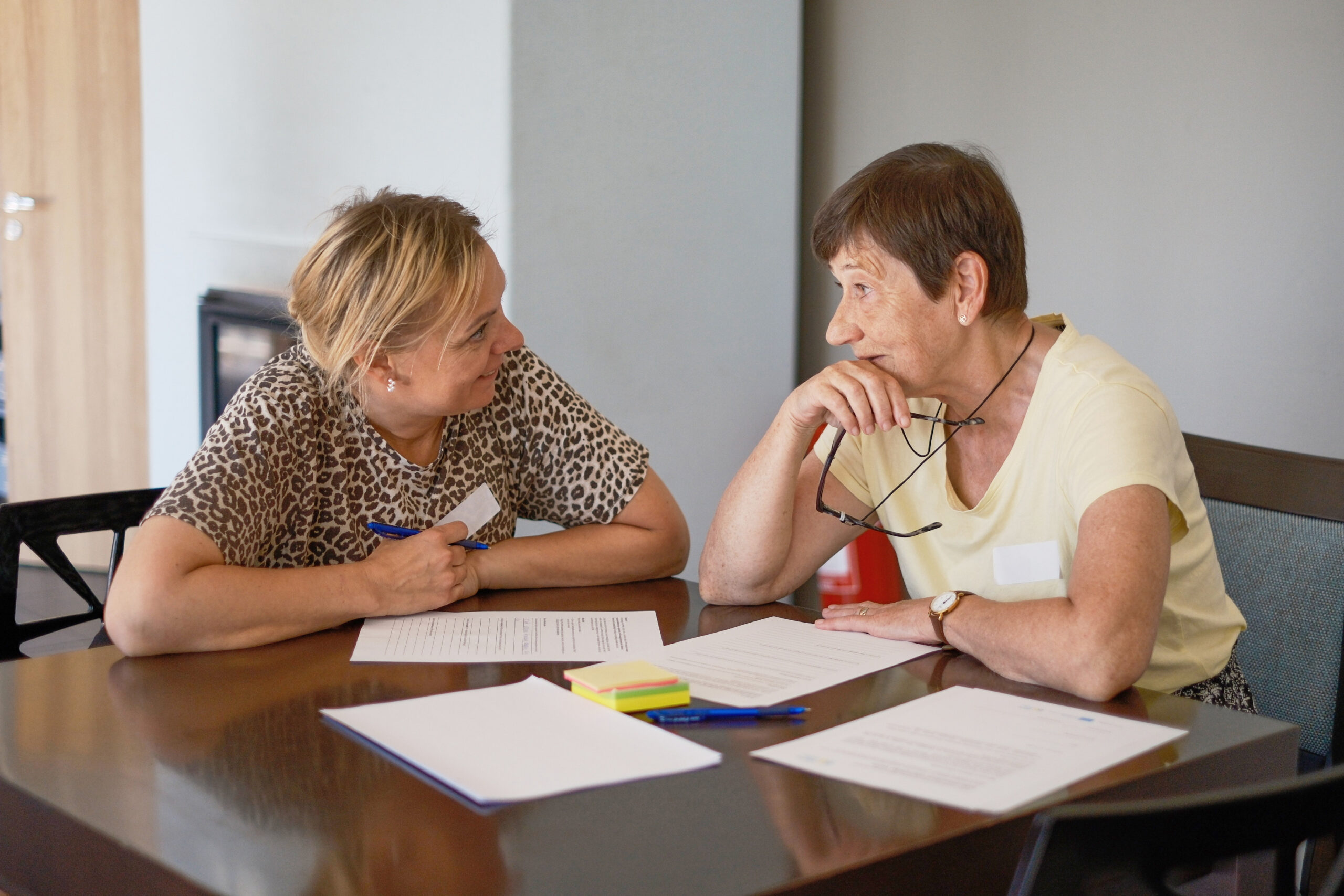
A CARE workshop in Estonia brings residents and facilitators together to co-develop practical solutions for more sustainable everyday practices. | © Jannus Jaska
Join the conversation on Zero Waste at municipal level
Municipalities play a crucial role in enabling circular living. However, how this looks in practice varies across regions. CARE explores how local governance, infrastructure and everyday practices can work together to reduce food and textile waste.
If you are working on circular economy strategies, municipal services, behaviour change or community engagement, we would be happy to connect and exchange insights. Follow CARE on Linkedin and Bluesky and subscribe to our newsletter to stay informed about new findings, tools and developments from our pilot regions.
Together with CARE, we transform our world for the better.
Header photo by Julia M. Cameron | Pexels
Related posts
Circular Clothing PilotCircular Food PilotLocal EngagementPartner Spotlight
From participation to practice: Ecofellows supports circular change in Tampere
Through local pilots, practical guidance and hands-on learning, Ecofellows helps households test more circular food and clothing practices. Within …
Aug 27, 2026
Circular Clothing PilotCircular Food PilotLocal EngagementProject Updates
CARE’s Circular Pilots are underway: first coaching sessions with households across Europe
Across Europe, the households participating in the CARE project are starting their circular journey. From Norway to Estonia, local …
Dec 9, 2025