Circular Clothing PilotResearch and Insights
Making clothes last longer takes more than a care label
Extending garment lifetimes is often framed as a consumer responsibility. CARE researchers Réka Tölg and Ingrid Haugsrud argue that care, repair and aftercare need to become easier to access, both at home and beyond.
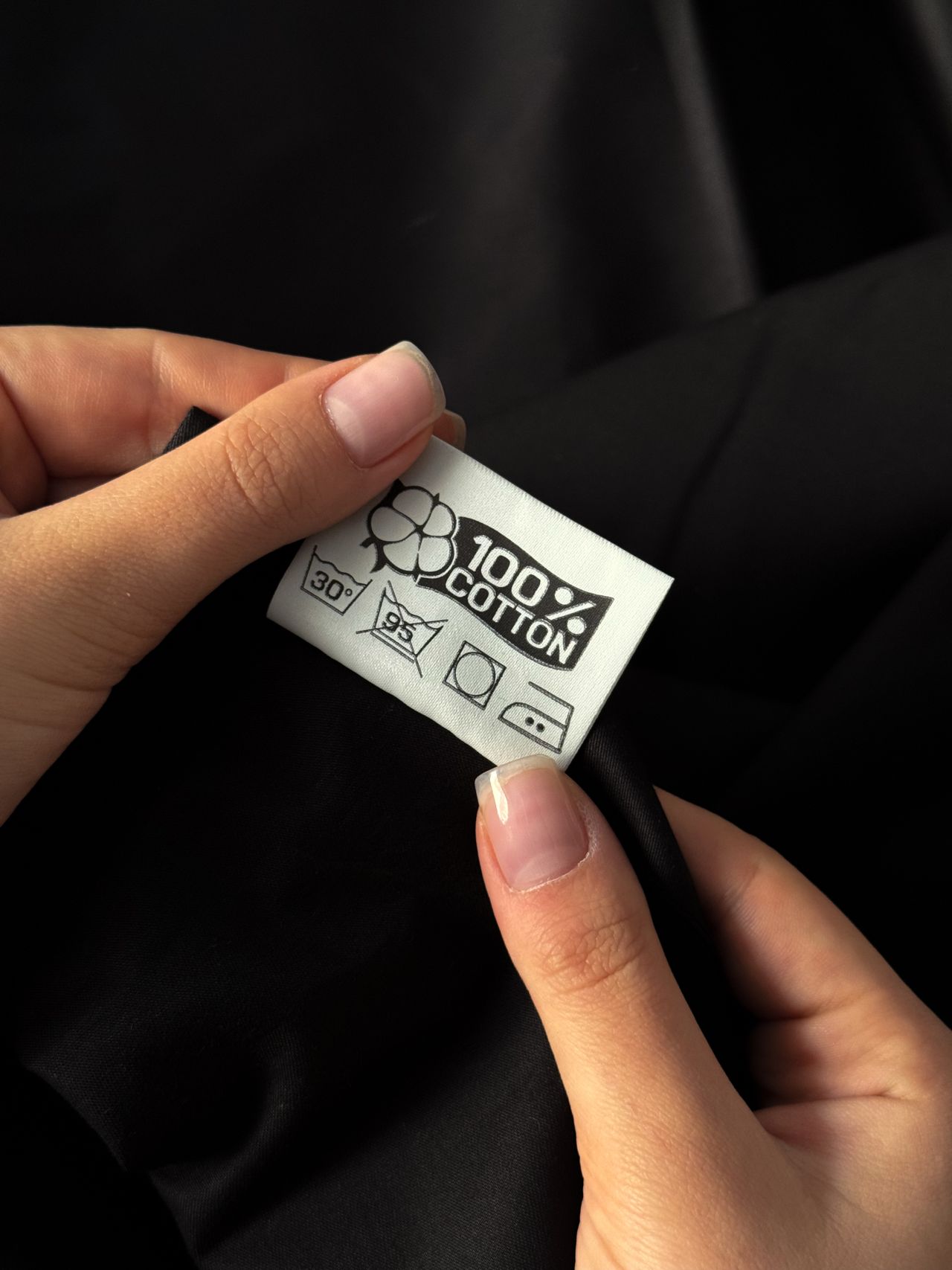
A care label is remarkably small for the amount of responsibility we place on it: Wash at 30 degrees. Do not tumble dry. Iron on low heat. Somewhere between those symbols sits the assumption that once a garment has left the shop, keeping it in use is largely up to the person who bought it. But what if longer clothing lifetimes depend on more than knowing which washing programme to choose?
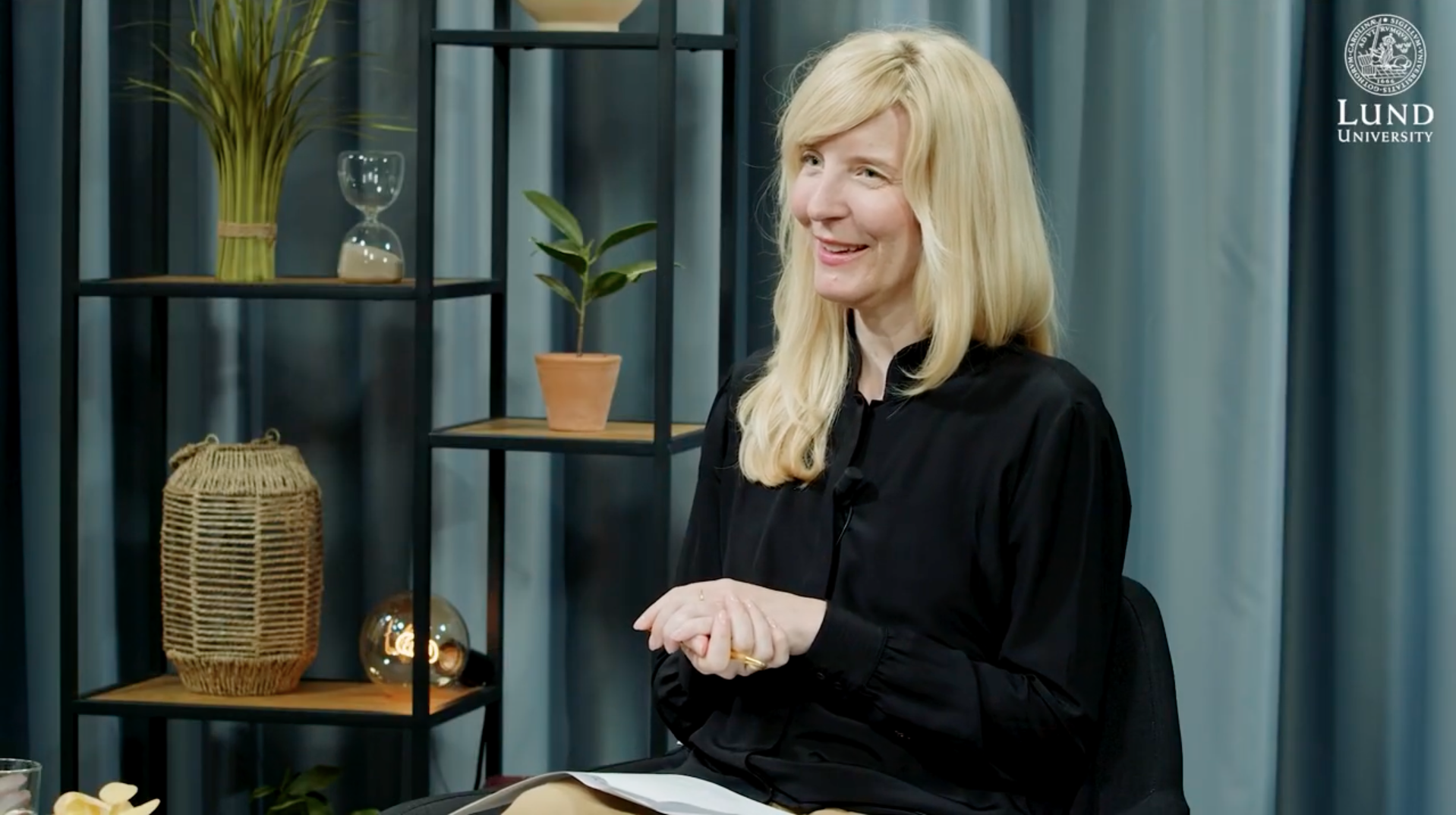
In an article for The Conversation, a publication that brings academic expertise to broader audiences, CARE researchers Réka Tölg from Lund University and Ingrid Haugsrud from Oslo Metropolitan University turn research on clothing care into practical advice for consumers, while raising a much broader question about the role of retailers and the systems surrounding everyday clothing use.
A garment’s life continues after the checkout
How long clothing remains in use depends on many things. For instance, it depends on how it was designed and produced, what materials it is made of, how often it is worn and how it is affected by stains and loose seams. Changing habits also come to play. Tölg and Haugsrud point to five areas where everyday care can make a difference: reconsidering washing habits, understanding materials, rediscovering what is already in the wardrobe, learning repair skills and choosing retailers that provide meaningful aftercare.
Some of these practices are deceptively simple. Airing a garment rather than washing it after every wear can reduce unnecessary laundering. Knowing whether something is wool, viscose or polyester helps people choose care methods that suit the material. Repair skills can turn a damaged garment from a disposal problem back into something wearable. And sometimes longevity starts with going back to your wardrobe and looking again at what is already there. That perspective connects closely with CARE’s circular clothing pilots, where households explore how clothing care, repair and wardrobe practices can extend active garment use.
Care is a skill. But it also needs support.
There is an obvious temptation to stop the story here: give people better information and the problem is solved. The research described by Tölg and Haugsrud suggests otherwise. Consumers may want to repair and care for their clothes but lack the skills or practical support to do so. Public repair workshops can help by bringing knowledge and social learning together. At the same time, some retailers already offer repair services, care products or spare parts, but these services can remain far less visible than the next new collection. That matters because circularity cannot rely indefinitely on exceptionally motivated consumers. If maintaining a garment requires specialist knowledge, considerable time or searching for services that are difficult to find, keeping clothes in use becomes an additional task rather than an ordinary part of consumption. The question therefore shifts from “How can consumers take better care of their clothes?” to “How can care become easier to practise?”
What happens when aftercare becomes part of the business model?
This question is becoming increasingly relevant for the European textile sector. The EU’s revised Waste Framework Directive entered into force in October 2025 and introduces common rules for extended producer responsibility for textiles. Member States are required to establish EPR schemes under which textile producers contribute to managing used and waste textiles. Waste management is only one end of the lifecycle, however. Extending the period before a garment becomes waste in the first place also requires attention to durability, maintenance, reuse and repair.
For retailers and brands, that can mean thinking beyond the point of sale: making repair services visible, providing appropriate spare parts and patches, supporting alterations or repurposing and treating garment care as a normal part of the customer relationship rather than an optional add-on. These are precisely the kinds of aftercare measures highlighted by Tölg and Haugsrud. For researchers and policymakers, the question is equally relevant. What forms of support actually help people maintain garments? Which services become part of everyday routines? And how can circular practices move from motivated niches into ordinary consumption?
From research insight to something people can use
© CARE project, licensed under CC BY-NC-ND 4.0
The CARE project explores these questions with households across its pilot regions.
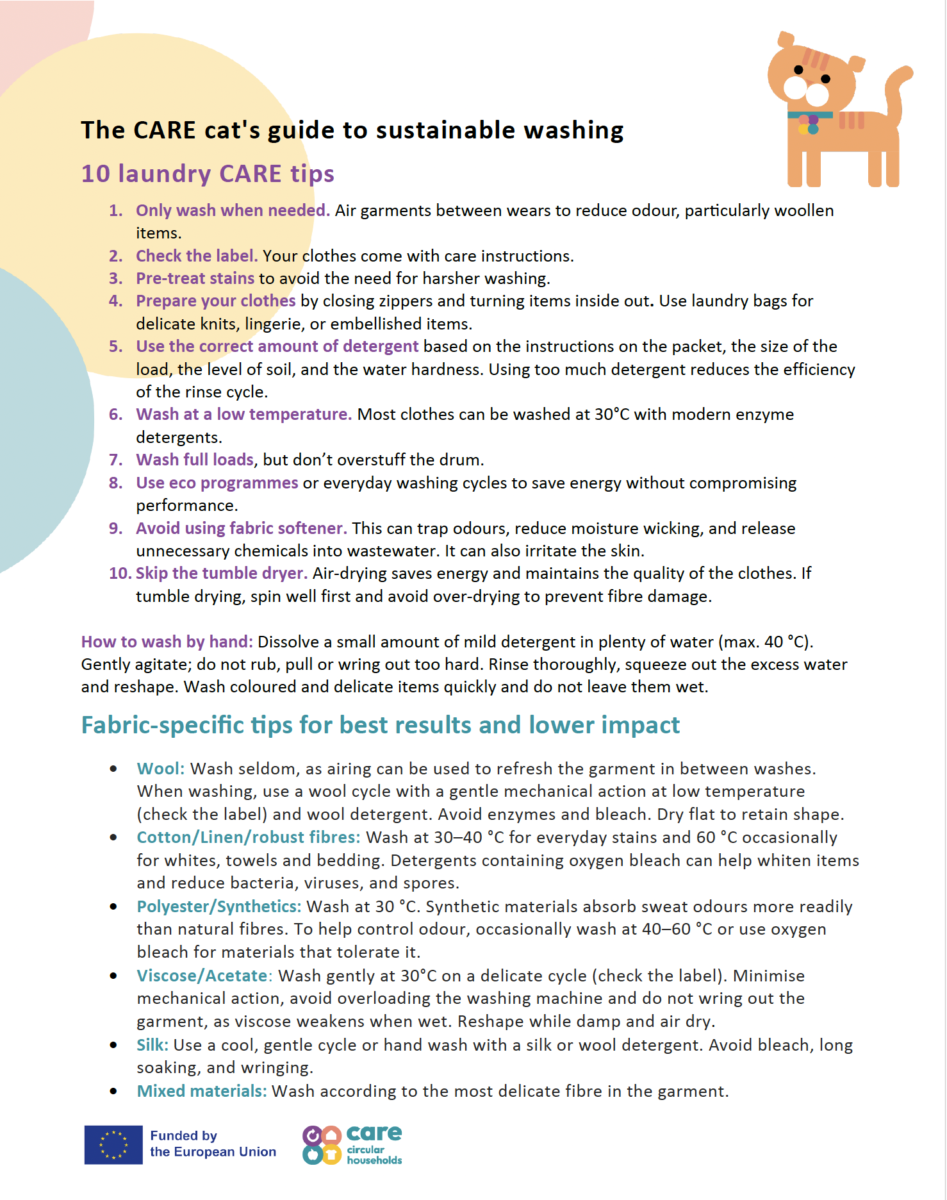
One lesson running through the project is that information becomes more useful when people can translate it into a concrete practice. That is why CARE has also developed practical material that can be used by local partners and advisory services.
The one-page “The CARE cat’s guide to sustainable washing“, for example, translates garment-care knowledge into ten straightforward laundry recommendations – from airing clothes between wears and pre-treating stains to washing full loads, avoiding unnecessary tumble drying and adapting care to different fibres. It also provides specific advice for wool, cotton and linen, synthetics, viscose, silk and mixed materials, making material knowledge easier to apply in conversations with households.
Keeping cloths in use is a shared taks
The original The Conversation article offers practical advice for people who want their clothes to last longer. But its wider message reaches beyond the laundry basket. Households influence garment lifetimes through washing, wearing, repairing and storing. Retailers influence whether care services are visible and accessible. Manufacturers influence durability and repairability. Municipalities, NGOs and community organisations can provide spaces for sharing skills. Researchers can help identify what supports practices over time. And policy increasingly shapes the responsibilities attached to products throughout their lifecycle. None of these actors can make clothing circular on their own. Perhaps the more useful question is therefore not simply how to persuade people to take better care of what they own. It is how to create a clothing system in which care itself becomes normal.
Read the full article by Réka Tölg and Ingrid Haugsrud in The Conversation: “Five ways to make your clothes last longer”.
Header photo by Dmitriy Steinke | Pexels.
Related posts
Circular Clothing PilotCircular Food PilotLocal EngagementPartner Spotlight
From participation to practice: Ecofellows supports circular change in Tampere
Through local pilots, practical guidance and hands-on learning, Ecofellows helps households test more circular food and clothing practices. Within …
Aug 27, 2026