Circular Clothing PilotCircular Food PilotLocal EngagementPartner Spotlight
Zero Waste Estonia brings circular living into everyday practice
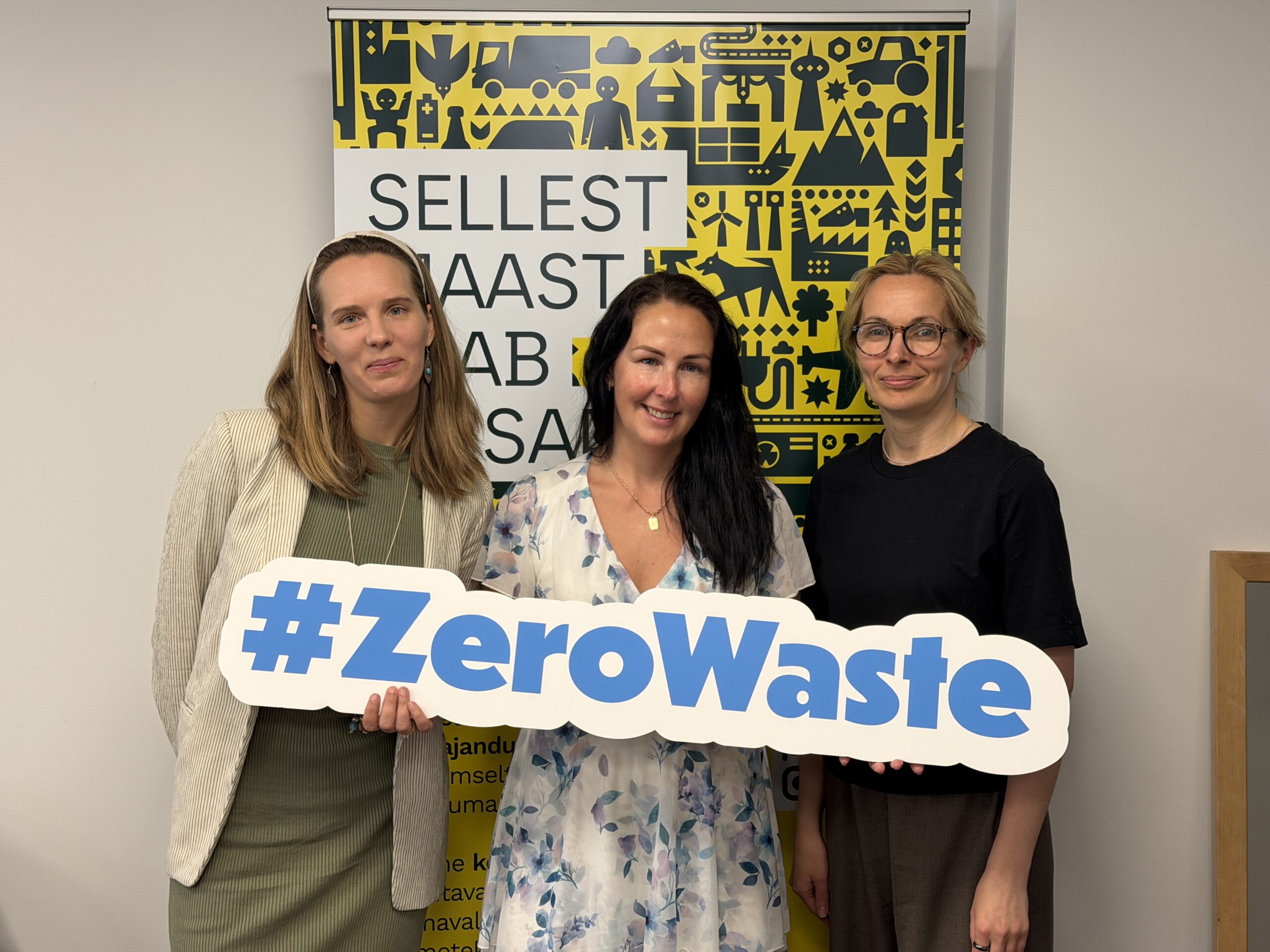
Turning food and clothing challenges into practical household action
Food waste and the overconsumption of clothing are closely connected to everyday routines. Households make decisions about what to buy, how to store food and how to care for garments, often without considering the environmental impact of these choices.
Within CARE, Zero Waste Estonia works to make these patterns visible and to support households in testing more circular practices. Together with Lääne-Harju Municipality, the organisation helps participating households explore how small, practical changes can reduce food waste, extend the life of clothing and strengthen awareness of the systems that shape everyday consumption. The Estonian pilot combines measurement, workshops, practical advice and reflection. Rather than focusing only on information, the approach helps households understand their own routines and test alternatives in everyday life.
Bringing expertise in food waste, textiles and circular economy
Zero Waste Estonia is a non-profit organisation that works to prevent waste and promote circular economy solutions in Estonia. The organisation’s activities include raising awareness, providing education, carrying out practical projects and taking a systemic approach to consumption and waste prevention.
Following recommendations from CSCP and Sitra, Zero Waste Estonia was invited to join the CARE consortium as a partner supporting Lääne-Harju Municipality in introducing and promoting circular practices.
In CARE, the organisation contributes expertise in two areas that affect every household: food and clothing. Its team supports the implementation of the Estonian pilot, works closely with participating households and helps translate circular economy principles into practical activities that can be tested at home.
The CARE activities in Estonia are supported by a team with complementary expertise in food waste prevention, textiles, and circular economy education: Katarina Papp brings experience as a circular economy and food waste expert, including practical knowledge of household guidance, food waste prevention and local circular solutions. Mirell Merirand specialises in sustainable textiles, circular business models as well as clothing care and repair. Together, they work with participating households to translate research questions into practical activities, reflecting on what supports or hinders change in everyday life. Marianne Sepp, CEO of Zero Waste Estonia, contributes to the wider communication and strategic framing of the organisation’s work.
For Katarina Papp, joining CARE offered an opportunity to combine her expertise in food waste prevention with practical work at household level. She emphasises that awareness of the resources and money embodied in food matters, but rarely changes routines alone. Households also need practical skills, accessible tools and solutions that fit into busy everyday lives.
Good meal planning, healthy eating, saving money and protecting the environment are not separate goals – they reinforce one another, says Katarina Papp.
Making everyday routines visible
At the beginning of the pilot, households were supported in gaining a clearer understanding of their current practices. In the food pilot, participants documented the edible food they discarded, including what was thrown away, how much and why. In the clothing pilot, households conducted wardrobe audits to gain a better understanding of their clothing ownership and usage over time.
These exercises show that simple figures do not always tell the whole story. For example, a large wardrobe does not automatically equate to a less sustainable approach if garments are kept and used for many years, whereas a smaller wardrobe may still be associated with frequent buying, selling or replacing. CARE therefore considers more than just the number of items, examining the routines, meanings and infrastructures behind consumption.
The first step is often to make everyday routines visible. Once households can see what is in their wardrobes and how much food they are throwing away, they can start to understand where change is both possible and meaningful, says Marianne Sepp.
Supporting households through practical interventions
Following the initial assessments, Zero Waste Estonia guides households through a series of practical interventions.
In the food pilot, activities focus on making creative use of leftovers, planning meals and shopping, and improving food storage. Participants learn how to use up ingredients before they spoil, plan meals around what is already available and store food in ways that help it remain edible for longer.
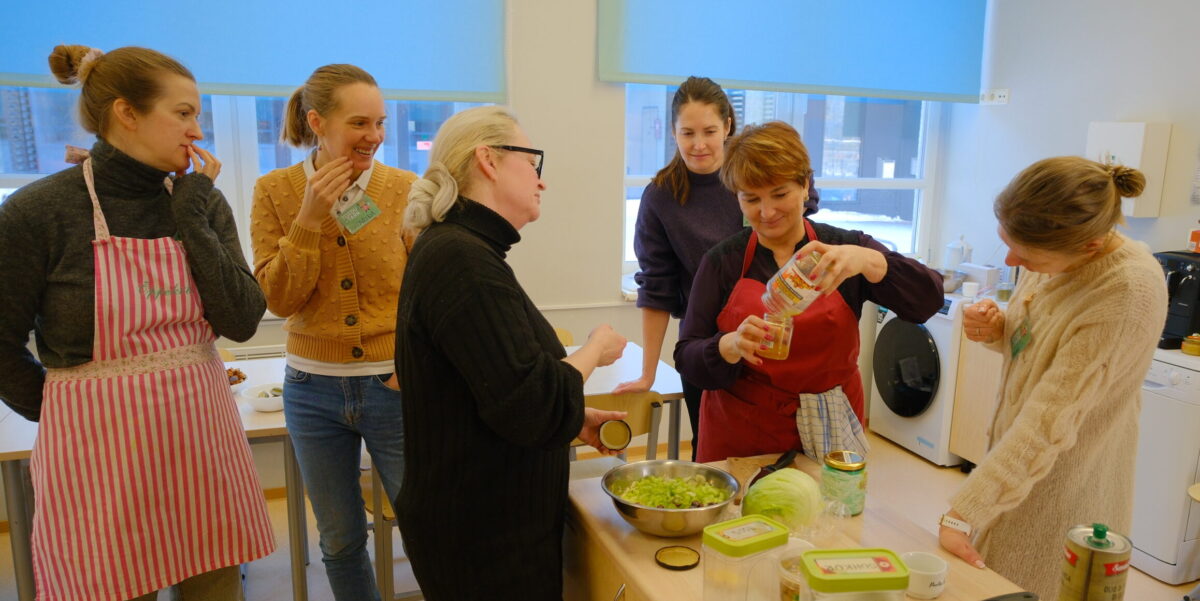
Participants in the Estonian CARE pilot explore practical ways to use ingredients creatively, plan meals and reduce avoidable food waste. | © Jannus Jaska, Zero Waste Estonia
In the clothing pilot, participants focus on garment care, repair, and personal style. Workshops help participants to interpret care labels, understand the effect of washing on garment lifespan and develop practical repair skills. Visible mending sessions also provide a social space where participants can bring damaged garments, learn from one another and grow in confidence when it comes to repairing items they value.
The work has highlighted that knowledge alone does not always lead to action. While people may understand that a garment can be repaired, they may lack the necessary time, tools, skills or support. Practical workshops and collective repair sessions can make these activities easier and more enjoyable.
Repair becomes much more accessible when people can do it together. Shared sessions provide tools and skills, as well as encouragement, conversation, and the sense that mending clothes is an ordinary part of daily life, says Mirell Merirand.
Hear from the Estonian CARE team
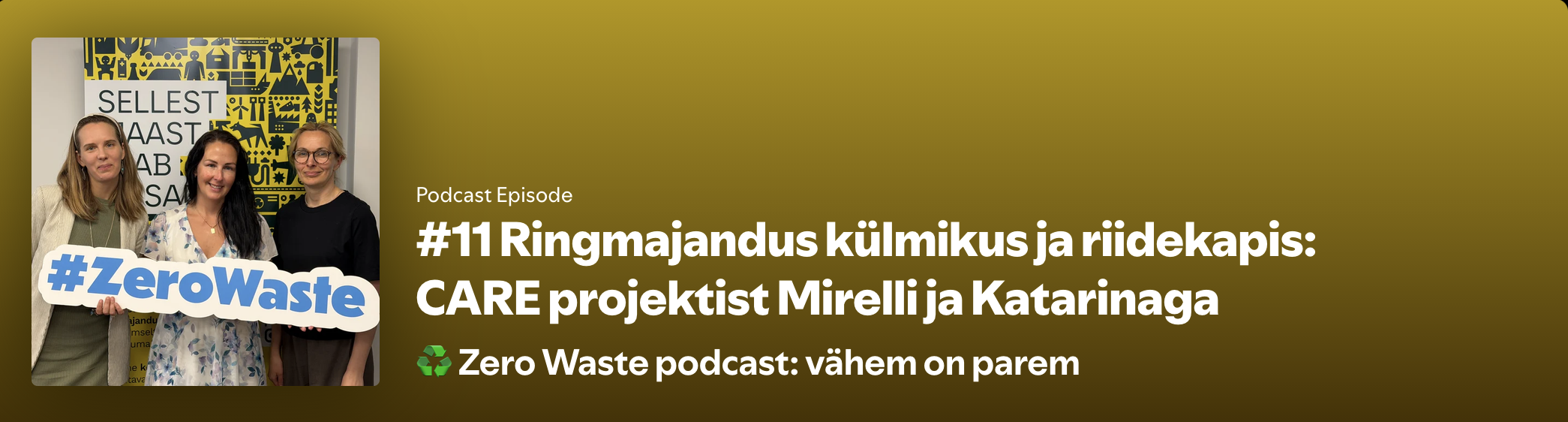
In a recent Estonian-language podcast episode, Marianne Sepp speaks with Mirell Merirand and Katarina Papp about their work in the CARE pilot. Together, they reflect on practical experiences with participating households, surprising observations from the food and clothing interventions, and the wider conditions needed to make circular practices part of everyday life.
The conversation offers a personal perspective on Zero Waste Estonia’s work in CARE and explores how household action can connect with broader questions of waste prevention and systemic change.
Listen to the full episode on Spotify. Please note that the conversation is in Estonian.
Connecting household action with systemic change
The Estonian pilot also demonstrates that circular living cannot depend on individual motivation alone. In Lääne-Harju, community food-sharing initiatives provide an example of how local infrastructure can support food waste prevention. Similarly, accessible repair services, community workshops and shared tools can help households keep clothing in use for longer.
At the same time, structural barriers remain. Repairing an inexpensive garment may cost more than replacing it, while regulations can restrict the redistribution of prepared food. Zero Waste Estonia therefore combines household-level activities with a wider perspective on the policies, services and business conditions needed to make circular choices easier.
This link between individual practices and supportive systems is central to CARE. The project not only asks whether households can change their behaviour, but also what kinds of local infrastructure, expertise and policy support make those changes possible and lasting.
National change starts within local communities. For people to support major policy changes, they first need to understand why those changes are necessary, says Jannus Jaska, who helped shape Zero Waste Estonia’s work in CARE during the project’s first 18 months.
Looking ahead: Learning from households and scaling what works
In the next phase of the CARE project, Zero Waste Estonia will continue to work with participating households, observing how their practices evolve over time and identifying which interventions are most helpful in supporting lasting change. The team’s observations will contribute to the wider CARE evidence base, helping to assess how household-level approaches can be adapted and replicated in other communities. Insights from Estonia will also inform the project’s practical tools, recommendations, and knowledge-sharing activities.
Through the households, we are learning what supports change, what creates barriers and which ideas have the potential to work beyond the pilot. Our aim is to turn these experiences into practical lessons that can support more circular communities in Estonia and across Europe, says Marianne Sepp.
Discover all CARE partners
Our project partners work hand in hand to explore what circular living means in practice – and how it can be scaled through collaboration, knowledge and action. Discover how each organisation contributes to a more circular future here.
Together with CARE, we transform our world for the better.