Circular Clothing PilotProject UpdatesResearch and Insights
A wardrobe worth wearing: How personal style can help keep clothes in use
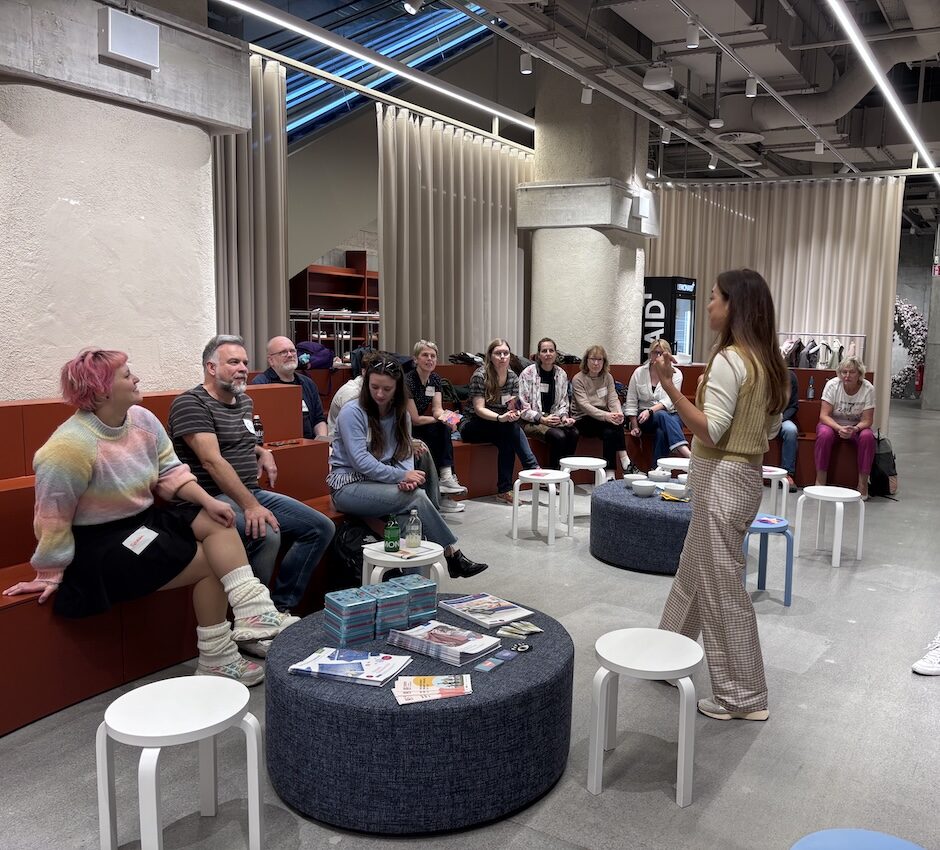
Why do some clothes become favourites while others stay in the wardrobe? In CARE’s Berlin pilot, households explored colour, fit and personal style as ways to rediscover what they already own. On World Circular Textiles Day, we ask what this can teach us about keeping clothes in use longer.
Every year on 8 October, World Circular Textiles Day brings together companies, organisations and individuals working towards a circular textiles future. The initiative records progress towards its long-term vision of full circularity of textile resources by 2050. In 2026, it is inviting its community to share what they are doing and learning along the way. CARE contributes a perspective from a place where circularity becomes very tangible: the wardrobe.
What happens between buying and letting go?
Europeans consume a considerable amount of textiles. According to the European Environment Agency (EEA), the average person in the EU consumed 19 kilograms of clothing, footwear and household textiles in 2022, up from 17 kilograms in 2019. Eight kilograms of that total were clothing. In the same year, EU Member States generated around 6.94 million tonnes of textile waste – 16 kilograms per person.
Keeping textiles in use for longer is one route towards reducing these pressures. The EU Strategy for Sustainable and Circular Textiles envisages a market in which products are durable, repairable and recyclable, reuse and repair services are widely available, and people can benefit from high-quality textiles for longer.
There is, however, still much we do not know about what happens during the time clothes are actually being used. The EEA identifies significant data gaps around product lifespans, repair activities and reuse – aspects that are critical for understanding whether and how textile lifetimes can be extended.
This makes the wardrobe itself an interesting place to look. A garment can be perfectly wearable and still spend months at the back of a cupboard. Why do we keep reaching for some pieces while others hardly get worn? A recent CARE workshop in Berlin approached that question through personal style.
Looking at the wardrobe with fresh eyes
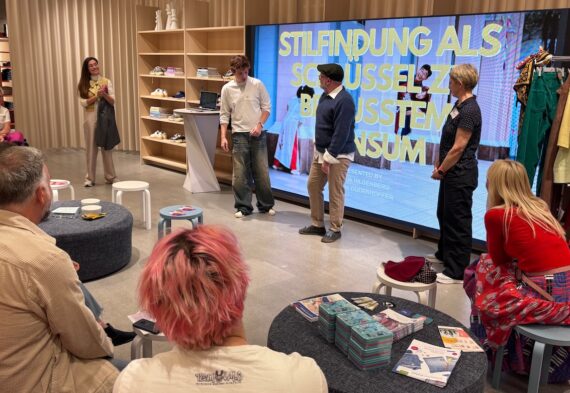
Participants explore personal style during the Berlin clothing workshop. | © VERBRAUCHER INITIATIVE e.V.
Households participating in CARE’s Berlin clothing pilot joined an interactive workshop organised by VERBRAUCHER INITIATIVE e.V., with support from Berlin-based fashion consultancy Sustainable Stylists.Participants first looked at colour and fit. Which colours work particularly well for them? How do proportions and different cuts change the way an outfit feels? These exercises provided a starting point for another look at their own wardrobes. Which pieces are favourites? Which ones rarely leave the hanger and why? Sometimes a garment itself may be fine, while its colour, cut or the way it is combined makes it harder to wear. The workshop encouraged participants to experiment before looking for something new.
Small styling techniques made this practical. Participants tried layering, accessories and different combinations of cuts, materials, patterns and colours. One example was the “3 pieces+ trick”: starting with two basic pieces and adding another garment or accessory to give an outfit more interest. Fashion inspiration was part of the exercise too. When an appealing outfit appears on Instagram or in a magazine, the next step does not necessarily have to be finding the same pieces online. Participants were encouraged to ask how they could interpret the look with clothes already in their wardrobe.
For one participating household, the workshop prompted a new perspective:
I was actually surprised to find out that I’m more of a ‘cool’ colour type. Up until now, I’ve always just gone along with the latest fashion trends without giving it a second thought. The workshop was really helpful in that respect.
The reflection touches on a wider issue for circular clothing: the relationship between changing trends, personal preferences and what people already own. A clearer sense of what we actually enjoy wearing may help us see more possibilities in an existing wardrobe and make more considered choices when something new is needed. Knowing which colours, cuts and combinations work well can also make it easier to shop with a clearer purpose, rather than choosing pieces that later prove difficult to wear or combine. In this way, personal style may help reduce unnecessary purchases and potentially avoid some returns.
Personal style as an entry point to circular clothing
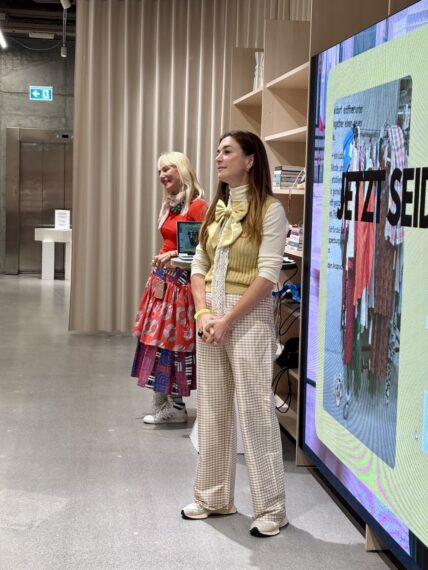
Sustainable Stylists supported the Berlin workshop on personal style and conscious clothing consumption. | © VERBRAUCHER INITIATIVE e.V.
The Berlin workshop also offers an idea for organisations working with households on circular consumption.
Many circular clothing activities begin with repair, second-hand clothing, textile waste or information about environmental impacts. Personal style offers another possible starting point: What do I already own? What do I actually enjoy wearing? What remains unused and what could make it useful again? From there, a workshop can move from observation to experimentation. Participants can examine frequently and rarely worn garments, explore colour and fit, practise combining pieces in new ways and translate inspiration from fashion media into outfits using what is already available. This makes a broad concept such as extending clothing lifetimes concrete. It also develops practical competencies rather than relying on information alone.
The approach can therefore work in both directions: helping people make more of the clothes they already own, while also supporting more deliberate choices when they do buy something new.
That distinction is relevant beyond this particular workshop. CARE researchers recently reviewed 84 peer-reviewed intervention studies on food waste and clothing consumption. They found that many interventions focus primarily on individual attitudes, choices or behaviours. A social-practice perspective adds another layer by looking at the routines, materials, meanings, skills and social contexts that shape what people are able to do in everyday life. A styling workshop cannot determine on its own whether someone will consume less. It can, however, create a space to develop skills, experiment with existing resources and reconsider the meanings attached to clothes – all elements that can matter when new practices are taking shape.
What happens after the workshop?
This is also where CARE’s research interest begins.
Across five European regions, the Circular Clothing Pilot explores three interconnected areas: clothing care and washing, wardrobe planning, and repair and redesign. Households test approaches in their own lives, allowing CARE to explore which ideas fit into everyday routines, which need to be adapted and which are difficult to maintain.
For the Berlin households, the questions now move beyond the workshop. Will a rarely worn garment return to regular use? Will participants draw on the styling techniques when they feel they have “nothing to wear”? Could knowing their preferences more clearly influence a future purchase? The answers will not be the same for every household. That is part of what CARE is interested in: understanding how circular practices interact with different routines, preferences and local contexts.
Giving clothes another chance to be worn
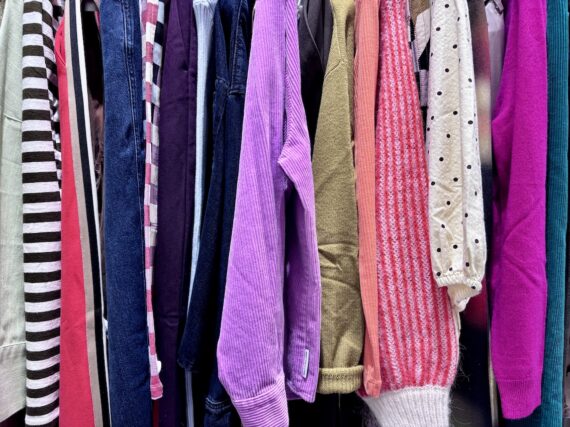
Colour, fit, materials and combinations were among the themes explored during the workshop. | © VERBRAUCHER INITIATIVE e.V.
World Circular Textiles Day looks towards a transformation of the entire textile system. Durable design, viable repair and reuse services, effective collection and recycling, responsible production and supportive policy all have a role to play. The EEA likewise stresses that longer use, reuse, repair and recycling need to work together if textile circularity is to reduce demand for new resources and environmental pressures.
The household wardrobe is one small part of that larger system. But it is where the intended lifetime of a garment meets everyday life. Sometimes keeping clothing in use requires repairing a seam or caring for a fabric differently. Sometimes it may begin with recognising why a piece has been neglected and finding another way to wear it.
The Berlin workshop adds that perspective to CARE’s work on circular clothing: extending the life of clothes is also about extending the possibilities people see in what they already have. The real test comes the next time a forgotten garment catches someone’s eye or a new look appears on their screen. Can what is already in the wardrobe offer another option? That is where a styling exercise can start to become a circular practice and where an existing garment gets another chance to be worn.
Follow CARE’s circular food pilots
CARE works with households across five European regions to explore how everyday food practices can become more circular. Follow CARE on LinkedIn and Bluesky or subscribe to our newsletter for further insights from the pilots and the practical tools emerging from the project.
Related posts
Circular Clothing PilotCircular Food PilotLocal EngagementPartner Spotlight
From participation to practice: Ecofellows supports circular change in Tampere
Through local pilots, practical guidance and hands-on learning, Ecofellows helps households test more circular food and clothing practices. Within …
Aug 27, 2026