Circular Food PilotProject UpdatesResearch and Insights
A little more time for food: How better storage and preservation can help prevent waste
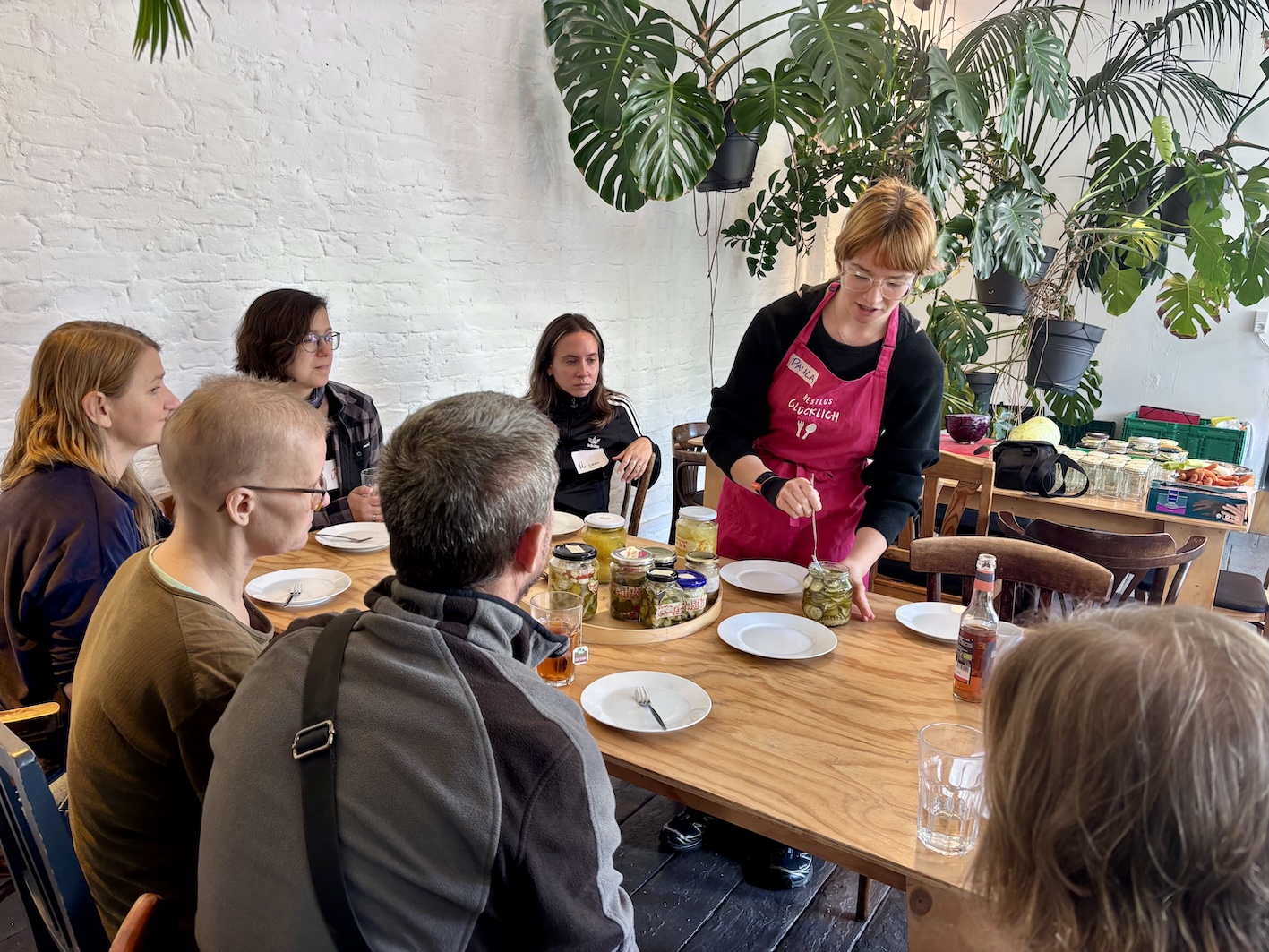
During a September workshop in Berlin, CARE households turned onions, cucumbers and courgettes that might otherwise have gone to waste into jars of preserved vegetables. For the participating households, the exercise was more than a lesson in pickling. It raised a practical question: What can we do with food when we realise we will not use it in time?
That question sits at the heart of CARE’s third food intervention and makes the International Day of Awareness of Food Loss and Waste on 29 September a fitting moment to look at what happens to food after we bring it home.
What happens after the shopping bag comes home
Food waste is often discussed in tonnes, targets and supply chains. Yet in Germany, 58 per cent of recorded food waste arises in private households. In 2022, this amounted to around 6.3 million tonnes, or 74.5 kilograms per person. That figure also includes unavoidable parts such as peels, bones and coffee grounds (Federal Ministry of Agriculture, Food and Regional Identity in Germany, 2026).
This year’s International Day of Awareness of Food Loss and Waste, led by the Food and Agriculture Organization of the United Nations (FAO) together with the United Nations Environment Programme, focuses on the transformative potential of reducing food loss and waste. FAO highlights benefits for food security and nutrition, natural resources and emissions, as well as productivity and economic development.
Transformation is a large word. In the Berlin CARE pilot, one part of it currently looks much more ordinary: understanding a fridge, noticing what needs to be used and knowing what options remain when fresh food is unlikely to make it into the next meal.
CARE households recently explored exactly this during a workshop on storing and preserving food, organised by the Verbraucher Initiative e.V. as part of the third food intervention and delivered with Berlin-based educational initiative RESTLOS GLÜCKLICH. RESTLOS GLÜCKLICH works to strengthen food appreciation and make climate-friendly eating tangible through practical educational formats.
Storage is part of the food-waste equation
Some discoveries began with things that seem almost too familiar to question. What does a best-before date actually tell us? Where in the fridge should different foods go? And which fruit and vegetables are better kept somewhere else entirely?
During a game, participants explored the difference between a best-before date and a use-by date. The distinction matters: food that has passed its best-before date is not automatically unsafe if it has remained unopened and been stored correctly, whereas highly perishable foods marked with a use-by date should not be eaten after that date.
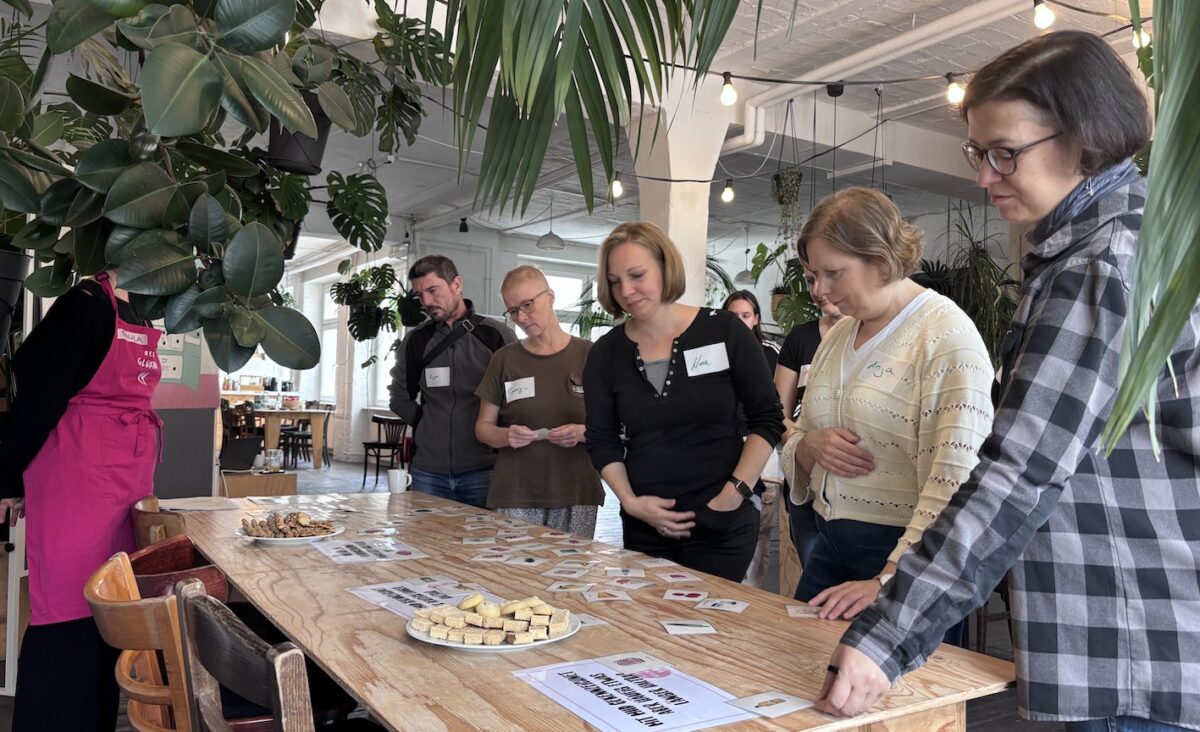
Participants in the Berlin CARE food pilot discuss food storage and shelf-life during a practical workshop activity. | © VERBRAUCHER INITIATIVE e.V.
The workshop also turned attention to the geography of the kitchen itself. Refrigerators have different temperature zones, and storing food in the appropriate place can help preserve freshness and quality. Tomatoes, for example, generally keep better outside the fridge, while their production of the ripening gas ethylene means they can accelerate the ripening – and eventual spoilage – of nearby produce. Fresh herbs, by contrast, can benefit from cool storage in a suitable container or damp cloth.
The point was not to memorise a new catalogue of rules. It was to understand why food behaves differently under different conditions and to give households more options before something becomes waste.
When “use it soon” becomes “save it for later”
The second half of the workshop moved from storage to preservation. Participants first tasted fermented and pickled foods before working with vegetables rescued by RESTLOS GLÜCKLICH. Onions, cucumbers, courgettes and cabbage became the raw material for trying out pickling and fermentation in practice. Participants left with recipes and instructions and were invited to continue experimenting at home over the following weeks.
For one participant, the technique answered a very familiar problem:
For some time now, I’ve been saving food – often vegetables – just before they go off. As a single-person household, I sometimes simply can’t use up large quantities. Pickling is therefore a brilliant solution, and I always have delicious savoury snacks in the house.
The quote captures something that statistics alone cannot: food waste does not always result from indifference or a lack of good intentions. Sometimes the quantities available simply do not fit the rhythms of a particular household. Practical skills can create another option.
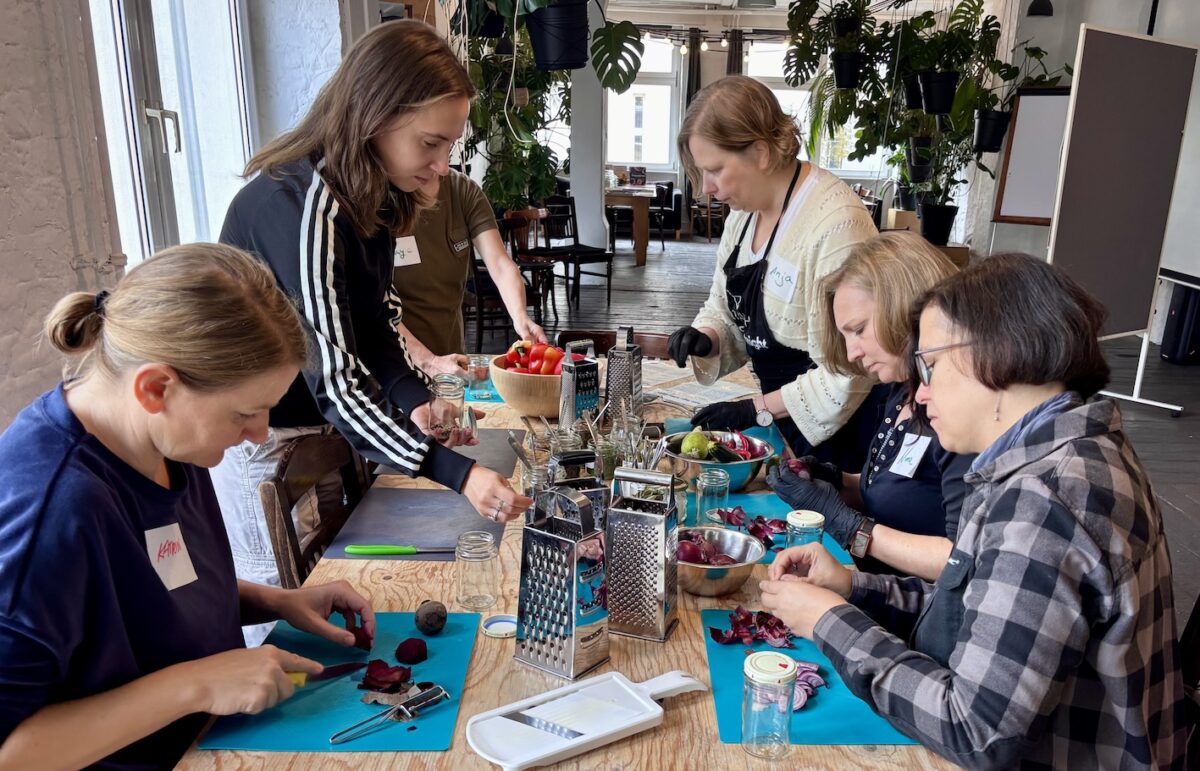
Participants prepare rescued vegetables for pickling and fermentation as part of CARE’s third food intervention in Berlin. | © VERBRAUCHER INITIATIVE e.V.
A workshop is only the beginning
That distinction is important for CARE. The third food intervention is not designed as a one-off lesson in correct storage. Households are encouraged to apply and adapt new practices over several weeks, supported through the CARE community platform. Challenges can include freezing food approaching its expiry date, reorganising and labelling food in fridges and cupboards, or experimenting with preservation techniques. Participants later reflect on which changes worked, what felt realistic and which practices they expect to maintain.
In other words, the research question is not simply whether people can learn a food-storage tip. It is whether a new practice can find a place in an existing household routine. That is also why the social dimension matters. Workshops provide opportunities to try techniques with others, compare experiences and build confidence before households have to make them work on their own. The CARE online community then keeps the conversation going through tips, challenges and peer exchange.
Giving food a little more time
The International Day of Awareness of Food Loss and Waste calls attention to a global challenge that reaches from farms and supply chains to retailers, restaurants and homes. The United Nations explicitly calls on governments, businesses, researchers and consumers to act together rather than treating food loss and waste as the responsibility of one group alone.
The Berlin workshop offers one small view into what that can mean at household level. Not every vegetable needs to become a jar of pickles. Not every household will adopt the same storage routine. What matters is expanding the range of things people know how to do before food becomes something to throw away.
For the CARE households, the real test therefore comes after the workshop: the next time vegetables need to be used quickly, a best-before date has passed or something has been forgotten at the back of the fridge. Will there be another option?
That is where learning can start to become practice and where a little more time for food can mean a little less waste.
Follow CARE’s circular food pilots
CARE works with households across five European regions to explore how everyday food practices can become more circular. Follow CARE on LinkedIn and Bluesky or subscribe to our newsletter for further insights from the pilots and the practical tools emerging from the project.
Header image © VERBRAUCHER INITIATIVE e.V.
Related posts
Circular Clothing PilotCircular Food PilotLocal EngagementPartner Spotlight
From participation to practice: Ecofellows supports circular change in Tampere
Through local pilots, practical guidance and hands-on learning, Ecofellows helps households test more circular food and clothing practices. Within …
Aug 27, 2026